How to Choose the Right Wind Turbine Generator for Your Needs?
Choosing the right Wind Turbine Generator can be challenging. The market is vast, with numerous options available. According to the Global Wind Energy Council's 2023 report, global wind power capacity has surpassed 900 GW. This growth emphasizes the importance of making informed choices.
Expert Bob McCarty, a renowned figure in renewable energy, states, "Selecting the right wind turbine is crucial for optimizing energy production." His insight stresses the necessity of understanding specific needs. Factors such as location, wind speeds, and energy requirements significantly influence decisions.
Many users may overlook essential details. For instance, turbine efficiency and height impact energy output. Additionally, local regulations and installation costs must be considered. Proper research and expert consultation can prevent costly mistakes. A thoughtful approach can lead to better energy solutions.
Understanding Your Energy Needs and Goals
Understanding your energy needs is crucial when selecting a wind turbine generator. Start by evaluating your energy consumption patterns. Assess how much energy you use monthly. This information helps you determine the appropriate generator size.
Tips: Consider your peak usage times. Are there specific months when you consume more energy? Knowing this can aid in deciding how much power you need.
Think about your goals. Are you aiming for energy independence or reducing electricity costs? Your objectives will influence the type and size of the turbine you choose. A small system may suffice for modest needs, while larger systems suit substantial energy demands.
Tips: Research local wind conditions. The effectiveness of a turbine depends on wind speed and consistency. You want the right match for your location. If wind resources are sparse, a larger turbine may be necessary, even if it feels excessive.
Remember, energy needs can vary. Monitor your consumption over a year. This data will refine your selection process. A well-chosen wind turbine can lead to sustainable energy solutions tailored to your unique situation.
Evaluating Different Types of Wind Turbine Generators
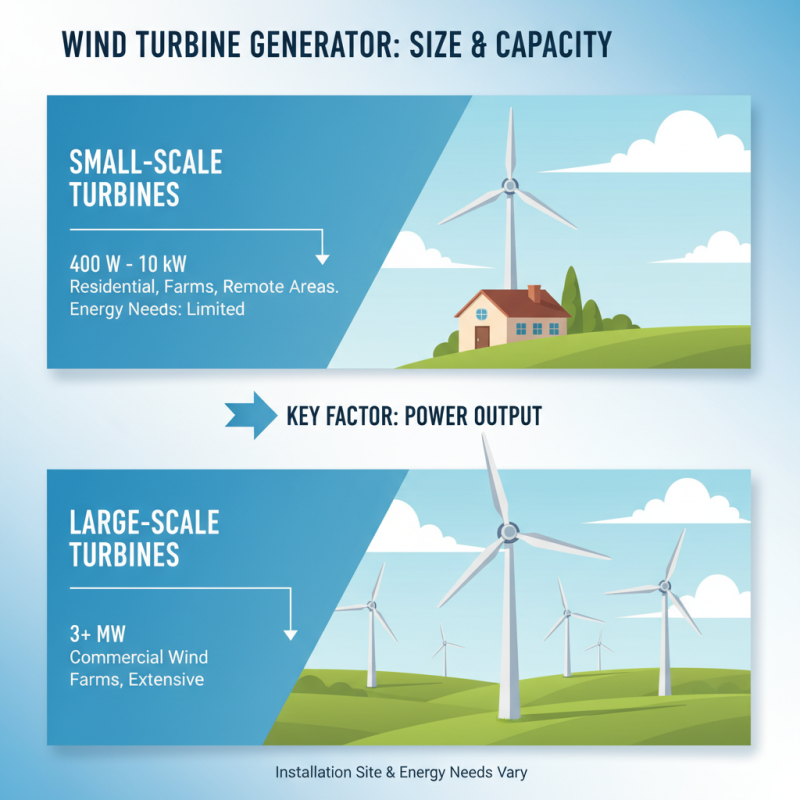
When evaluating different types of wind turbine generators, you should consider several key factors. The size and capacity of the turbine are crucial. For example, small turbines can generate between 400 watts to 10 kilowatts. In contrast, large commercial turbines can produce over 3 megawatts. This variance affects the installation site and energy needs.
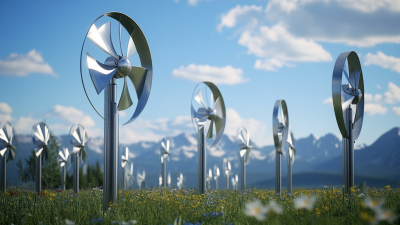
Another important aspect is the turbine's design. There are horizontal-axis and vertical-axis turbines available. Horizontal-axis models are more common, accounting for nearly 95% of installations globally. However, vertical-axis turbines can be beneficial in urban settings due to their compact nature. According to the U.S. Department of Energy, wind energy made up about 8.4% of total U.S. electricity generation in 2020. This statistic indicates a growing reliance on wind energy, but there are challenges to consider.
Cost can also be a significant hurdle. The average cost of installing a residential wind turbine can range from $15,000 to $50,000, depending on quality and capacity. Financial incentives exist, but they require research. Maintenance is another ongoing expense. It’s essential to factor these into your overall evaluation. Not all turbines perform well in every environment, which makes this an essential point to reflect on.
Assessing Location and Environmental Factors
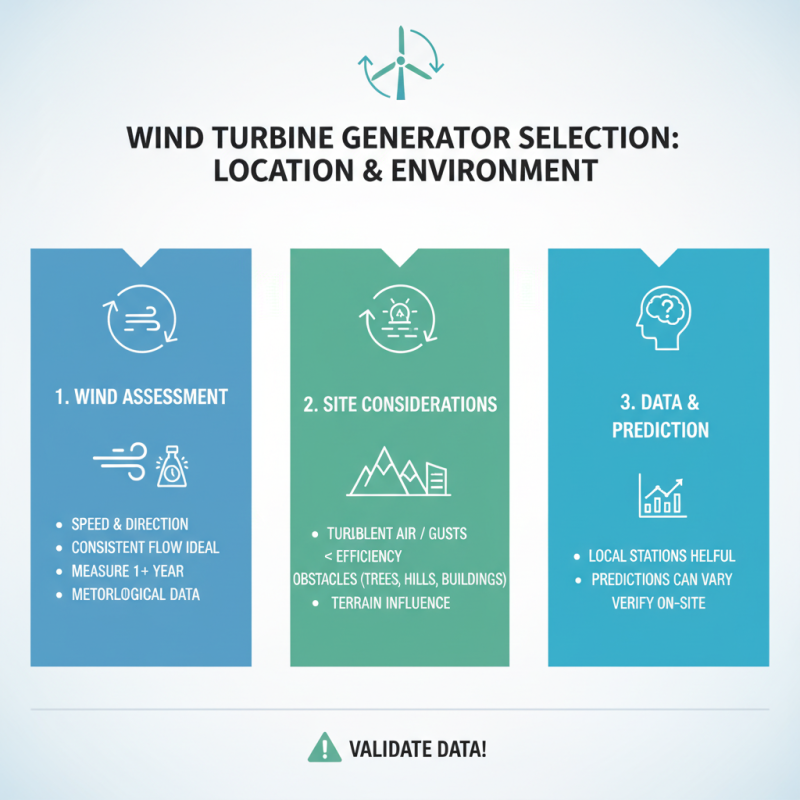
When selecting a wind turbine generator, assessing location and environmental factors is crucial. The wind speed and direction are key elements. A site with consistent wind flow is ideal. Areas with frequent gusts or turbulent air may reduce efficiency. Ideally, you want to measure the wind speed over a year. Data from local meteorological stations can help. However, remember that predictions can be wrong.
Consider the landscape too. Hills, trees, and buildings can block wind. A clear, open space allows for better energy generation. Urban environments often present challenges. Noise, visual impact, and zoning laws are important. You might need to check local regulations. Also, think about how wildlife impacts your choice. Birds and bats may be affected. It's worth pondering if your choice impacts local ecosystems.
Each site requires careful thought. Not every potential location will meet your needs. Sometimes, you may find the perfect wind speed, but face challenges with other factors. Evaluate all aspects thoroughly. The right choice lies in understanding the interplay of these elements. Regular monitoring and adjustments may also be necessary for optimal performance.
Calculating Budget and Cost Considerations
When selecting a wind turbine generator, budget and cost considerations are crucial. Understanding your financial limits can help guide your options. Prices vary widely based on size and power capacity. Small turbines might start around a few thousand dollars, while larger models can escalate to tens of thousands. Don’t just focus on the upfront cost.
Ongoing maintenance is essential and can accumulate over time. It's wise to consider installation costs as well. Some locations may require additional work, which can inflate your initial budget. Assess potential savings in energy bills too. This can offset your investment over time.
Tips: Calculate your expected energy needs first. Research local incentives for renewable energy. These can reduce your overall expenses. Always compare warranties and service plans offered. This could save you from unexpected costs later on. Remember, the cheapest option isn’t always the best. Factor in durability and reliability for long-term savings.
Investigating Installation and Maintenance Requirements
Choosing the right wind turbine involves careful consideration of installation and maintenance. Proper site selection is crucial. You must assess wind patterns and land conditions. A clear space is needed, free from tall trees and buildings. This helps maximize energy capture. However, securing permits can be time-consuming and complex.
Once installed, maintenance is vital to keep the turbine running smoothly. Regular inspections of the blades and mechanical parts can prevent costly repairs later on. Some may overlook the importance of such checks. It's easy to assume everything is fine after initial setup. However, neglecting routine maintenance can lead to decreased efficiency.
Additionally, consider access for maintenance tasks. If the turbine is in a remote area, that may complicate future repairs. It's essential to think about logistical challenges before installation. Proper planning can ease maintenance burdens down the road. Balancing these factors ensures you maximize the benefits of your wind turbine.
How to Choose the Right Wind Turbine Generator for Your Needs