


Blog

How to Choose the Best Cold Brew Coffee Maker

Choosing the right Cold Brew Coffee Maker is less about chasing the newest design and more about finding a brewer that fits your routine. Think about how much coffee you drink, where the brewer will sit, and how easily its parts can be cleaned. A tall glass carafe may look elegant, but it can crowd a refrigerator shelf. A compact mesh-filter pitcher may be easier to store, though its filter can be awkward to rinse. Small details matter.

Todd Simpson, creator of the Toddy Cold Brew System, offers a useful principle through his work: repeatable brewing matters more than a polished-looking jar. That is worth remembering. A dependable brewer should help you control steeping time, grounds, and water without turning the kitchen into a science lab. Check the filter’s material, the lid’s seal, and whether the container holds enough concentrate for your week. If the product instructions are vague, pause. You may want clearer guidance.

This guide compares common brewer styles, capacities, filters, and cleaning needs, then explains which features suit different households. It also considers glass and plastic options, since durability and handling can affect everyday use. There is no perfect model for everyone. A busy commuter may value a leak-resistant pitcher, while a weekend drinker may prefer a simple jar. Your first brew may taste too strong. That is useful feedback, not failure.
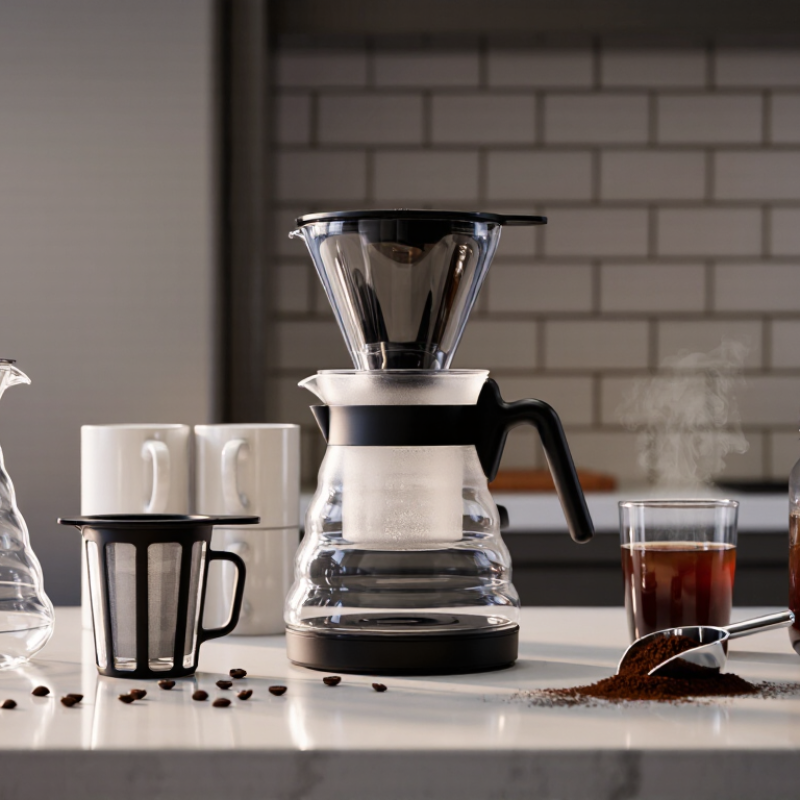
How to Choose the Best Cold Brew Coffee Maker

Understanding How Cold Brew Coffee Makers Work

Understanding How Cold Brew Coffee Makers Work

A cold brew maker is a simple steeping system: grounds sit in cool water, then a filter separates the liquid. Many models use a fine-mesh basket inside a glass or plastic container. Water moves slowly through the grounds, so grind size and contact time shape the result. A coarse grind helps limit sediment. Too fine, and the filter may clog. Most home recipes steep for 12 to 24 hours, but the exact time depends on the recipe and taste. Longer is not automatically better.

Some makers produce ready-to-drink coffee; others make concentrate that needs dilution. Check the instructions before choosing a vessel size. The National Coffee Association’s 2023 National Coffee Data Trends report found that 16% of U.S. adults had cold brew in the previous week, compared with 9% in 2019. That growing interest makes practical details worth checking: a removable filter is easier to rinse, and clear volume markings help repeat a batch. Keep notes. I still find timing easy to misjudge. Small changes in grind, water, or steeping time can shift the flavor, so treat the first batch as a test, not a perfect formula.
How to Choose a Cold Brew Coffee Maker

Typical coffee-to-water ratios vary by the style of cold brew. Concentrates use more coffee and are usually diluted before serving.

Cold brew makers steep coarsely ground coffee in cool or room-temperature water, then separate the grounds with a filter. A typical steep lasts about 12–24 hours. Choose a maker with a capacity and filtration setup that suit your batch size and cleanup preferences.

Identifying Your Brewing Needs and Batch Size

Before comparing cold brew makers, estimate how much coffee you actually drink. A single glass each morning calls for a smaller brewer, while a busy household may use a larger batch over several days. Small batches matter. They take less refrigerator space and can help prevent brewed coffee from sitting unused. A large pitcher may seem efficient, but it can become awkward when shelves are already crowded.

Think about your routine, too. Do you want concentrate for milk drinks, or ready-to-pour coffee over ice? Concentrate usually needs dilution, so check whether the maker’s capacity refers to brewed liquid or grounds-and-water volume. Those numbers are not interchangeable. A removable filter can make grounds easier to lift out, while a narrow opening may complicate cleaning. Picture rinsing it beside your sink; small design details become noticeable quickly.

For a useful estimate, measure your usual serving and multiply it by the number of servings you want on hand. Then leave room for ice, dilution, or shared cups. If you are unsure, a moderate-capacity brewer is often less risky than choosing the largest one available. I would still allow for some trial and error: serving sizes vary, and the first batch may be stronger than expected.

Comparing Maker Designs and Filtration Systems

Cold-brew makers mainly differ in how they move water through coffee and how easily they separate the grounds. Immersion brewers steep coarse grounds in a jar or carafe, then rely on a removable basket or filter to strain the batch. They are simple to handle, but a crowded basket can leave grounds unevenly soaked. Slow-drip designs pass water through the bed over time, offering more control but requiring careful setup. A drip can clog. That small nuisance matters.

Filtration changes the cup as much as the maker’s shape. Fine mesh is reusable and keeps some oils in the drink, often giving it a fuller feel; very fine particles may still slip through. Paper filters catch more sediment and oils, producing a cleaner cup, though they add a recurring supply cost. The Specialty Coffee Association’s Golden Cup Standard gives brewed coffee a reference range of 1.15–1.35% total dissolved solids and 18–22% extraction yield. These are not cold-brew-specific targets, but they show why consistent filtration and steeping deserve attention. Taste-test a small batch before choosing a large-capacity vessel. Your tap water and grind size can shift the result, and no filter fixes both. I’d check how easily the basket lifts out; wet grounds can be awkward.

Assessing Materials, Cleaning, and Ease of Use

A cold brew maker spends hours holding water and coffee grounds, so its materials matter. Glass lets you see the liquid level and check for residue, but it can chip if knocked against a sink. Stainless steel is sturdy and blocks light, though an opaque vessel makes it harder to judge how much concentrate remains. Plastic is light and easy to handle; inspect it for scratches, which can trap residue over time. Small details matter.

Cleaning can make or break a routine. Look for a wide opening, a removable filter, and few narrow seams where fine grounds can collect. A filter that lifts out in one piece is usually easier to rinse than a multi-part assembly. Check the care instructions before using a dishwasher; heat can damage some components. Rinse the filter promptly after brewing. Dried grounds are stubborn.

Ease of use includes more than pouring. A stable base, a secure lid, and clear measurements help prevent spills and guesswork. Try to picture the maker fitting in your refrigerator door or on a crowded shelf. I might favor a glass pitcher for visibility, then remember that a full pitcher feels heavy and fragile. There is no perfect setup. Choose the one you can clean thoroughly and handle comfortably on an ordinary morning.

How to Choose the Best Cold Brew Coffee Maker - Assessing Materials, Cleaning, and Ease of Use

Maker Type Typical Materials Cleaning and Filtration Ease of Use Potential Drawbacks Best Suited For
Glass pitcher with a removable filter Glass vessel with a stainless-steel or food-contact plastic filter basket and lid. Glass is generally easy to rinse and does not readily retain coffee odors. Remove the filter after brewing and rinse out trapped grounds; check whether the filter is dishwasher-safe. Simple setup: add coffee and water to the filter, steep, then lift out the filter. The transparent vessel makes the brew easy to see. Glass can break if dropped or exposed to sudden temperature changes. A fine mesh may let some sediment through. Home brewers who want to see the coffee and prefer a non-porous brewing vessel.
Wide-mouth jar with a filter insert Usually glass, with a reusable metal mesh or food-contact plastic filter. The wide opening makes it easier to reach inside and wash by hand. Mesh inserts need a thorough rinse so fine grounds do not remain in the weave. Few parts and a familiar shape make it straightforward to fill, steep, and store. Check that the lid fits securely before refrigerating. May be awkward to pour without a spout. Glass remains vulnerable to breakage, and filter fit varies by design. People who value a simple design and easy access for handwashing.
Plastic pitcher with a filter basket Food-contact plastic pitcher, often paired with a stainless-steel or plastic filter. Lightweight parts are usually easy to handle. Follow the care instructions; some plastics can scratch, and scratches may make thorough cleaning more difficult. Light weight and a pour spout can make serving convenient. A handle and clearly marked fill levels are useful features to look for. Plastic can become cloudy or retain odors over time, depending on the material and care. Avoid assuming every model is dishwasher-safe. Households that prioritize a lightweight vessel and convenient pouring.
Stainless-steel brewer or pitcher Stainless-steel vessel, often with a metal mesh filter and a fitted lid. Many steel surfaces rinse clean readily, but grounds can collect around seams, lids, or filter edges. Check whether all components can be separated for washing. Typically sturdy for regular handling. An opaque vessel makes it harder to view the coffee while it steeps. Usually costs more than a basic jar-style setup; the opaque body hides the brew, and some designs have narrow openings that are harder to clean. Brewers who favor a durable, non-glass vessel and do not need to see the brew.
Brewing container with a paper-filter option Container may be glass, plastic, or metal; paper filters are used for filtration. Paper can capture fine particles and is discarded after use, reducing filter-mesh cleanup. The container and any reusable filter holder still need washing. Useful for brewers who prefer a cleaner cup and do not want to scrub a reusable mesh after every batch. Requires replacement filters and creates disposable waste. Paper-filter compatibility depends on the brewer's design. People who prefer finer filtration and are comfortable using disposable filters.

Materials, capacity, filter design, and dishwasher compatibility vary by model. Check the manufacturer's care instructions, and choose a size that fits your refrigerator and typical batch needs.

Matching Features and Price to Your Budget

A cold brew maker should fit both your counter and your weekly coffee budget. Start with capacity: a one-liter pitcher may suit one or two drinkers, while a larger batch can save repeated prep. Check whether the filter lifts out easily; fine grounds caught in narrow mesh can make cleanup frustrating. Simple glass models often cost less, but may lack measurement marks or a sturdy lid. Pay for features you will use, not a long list on the box.

Tips: Compare total cost, not just the shelf price. Include replacement filters if needed, and check whether common jars fit the lid. Look for a wide opening and clear volume marks. If possible, handle the maker before buying. Thin glass can feel less reassuring when full.

For a tight budget, a basic pitcher with a removable filter may be enough. If you make coffee every day, a stronger lid and easier cleaning could justify spending a little more. Think about storage, too: a tall brewer may not fit beneath a low refrigerator shelf. It is easy to overvalue clever extras; a built-in timer sounds useful, but steeping time can be tracked separately. I would prioritize durable parts and simple washing, though that choice may not suit everyone.

Tell us about your project

Our Off-grid experts will come back with recommendations

x
Can we help?
Leading Edge
Off-Grid Power Requirements
Leading Edge
Sign Up To Receive Our Newsletter

Stay up to date with Leading Edge innovations and offers by joining our mailing list. Occassionally we send informative newsletters, offers and promotions that we think you'll find useful or interesting.