

Buying Cosmetic Bags across international markets requires more than choosing attractive colors or low prices. A practical buyer studies materials, construction, capacity, and supplier reliability before placing an order. A soft velvet pouch may look elegant online, yet its lining can stain easily after contact with powder or liquid products. Small details matter.
This guide presents ten useful tips for comparing Cosmetic Bags worldwide. It considers fabric quality, zipper performance, stitching, size, organization, packaging, and communication with sellers. Buyers should request clear photographs, accurate measurements, and product samples whenever possible. A sample often reveals problems that polished product images hide. Check the seams closely. Test the zipper twice.
Responsible purchasing also requires attention to transparent sourcing and dependable business practices. Look for suppliers who describe materials honestly and provide consistent product information. Where relevant, ask about recycled fabrics, washable linings, and packaging reduction. These choices can improve long-term value, not merely appearance. Standards and consumer expectations differ between markets, so careful research remains essential.
I once trusted a beautiful listing and ignored the weak zipper. That was a costly lesson. Price alone is not quality. Nor is a luxury label automatic proof of durability. Some recommendations may need adjustment for local budgets, climates, and customer preferences. Use the ten tips as a practical framework, then verify each decision with evidence, testing, and clear communication. Good buying is rarely perfect. It becomes better through careful questions.
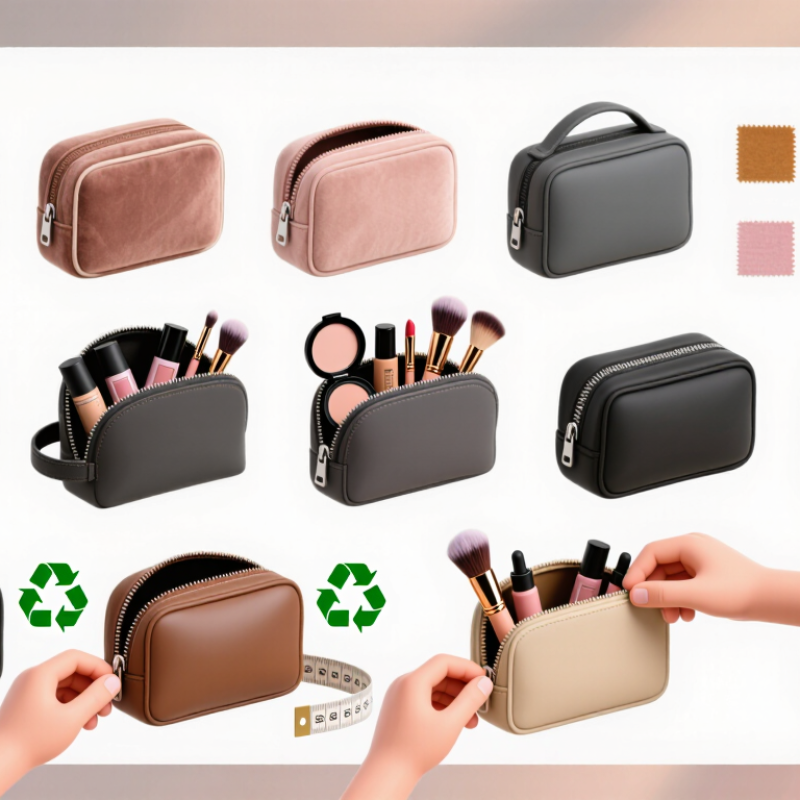
Before buying a cosmetic bag worldwide, define what it must carry. A daily pouch needs space for a compact, lip product, brush, and small mirror. A travel case may need stronger structure, washable lining, and separate compartments. My first shopping list was too ambitious. I wanted maximum capacity, but the bag became heavy and difficult to clean.
Beauty consumption supports careful planning. Grand View Research valued the global cosmetics market at about USD 446.2 billion in 2023. Its report projects continued growth through 2030. This suggests that cosmetic storage will serve increasingly varied routines. Still, a market forecast cannot decide your priorities. Your routine can. Count your products for one week, then measure the tallest container. Leave some spare room, not half the bag.
Material and construction deserve equal attention. A water-resistant surface helps with accidental spills, while a smooth lining reduces residue buildup. Check zipper quality, seam strength, handle placement, and the empty weight. Research from Allied Market Research identifies convenience and portability as important factors in beauty product purchasing. For international orders, also review dimensions, return terms, delivery time, and currency conversion. I sometimes overvalue appearance. A neat design means little if brushes touch leaked cream. Choose the smallest bag that fits your real routine, and accept that your needs may change.
| No. | Buying Tip | Key Dimension to Check | Recommended Priority | Practical Requirement | How to Verify Before Buying |
|---|---|---|---|---|---|
| 1 | Define the intended use | Daily use, travel, professional use, or emergency storage | Very High | Choose the format according to how often the bag will be carried and where it will be used. | List the products you normally carry and remove items that are not used regularly. |
| 2 | Match the size to your product collection | External dimensions and usable internal volume | Very High | A compact bag suits a few essentials; a larger bag is better for skincare, makeup, and tools. | Measure the tallest and widest items, then compare them with the listed inner measurements. |
| 3 | Check compartment design | Pockets, elastic loops, dividers, and brush holders | High | Separate makeup, brushes, liquids, and small accessories to reduce clutter. | Review interior photos and confirm whether pockets are open, zipped, removable, or adjustable. |
| 4 | Prioritize leak-resistant construction | Lining, seams, closure, and resistance to moisture | Very High | A coated or wipe-clean lining is practical for liquid foundation, creams, and toiletries. | Look for specific material and construction details instead of relying only on terms such as “waterproof.” |
| 5 | Evaluate material durability | Fabric thickness, abrasion resistance, flexibility, and structure | High | Frequent travelers need fabric that tolerates compression, handling, and repeated cleaning. | Check close-up images, care instructions, user feedback, and the stated material composition. |
| 6 | Select a secure closure | Zipper quality, snap strength, drawstring security, and opening width | High | The closure should remain shut when the bag is placed vertically or packed tightly. | Check customer photos and confirm that the opening is wide enough for easy access. |
| 7 | Consider airline and border requirements | Capacity, transparency, portability, and liquid-handling needs | High | For air travel, keep liquid containers within the applicable local airport security limits and use a suitable pouch. | Confirm current rules with the departure airport or aviation authority before packing. |
| 8 | Compare weight and portability | Empty weight, handle design, foldability, and packed footprint | High | A lightweight, compressible design helps reduce luggage bulk without sacrificing organization. | Compare the listed empty weight and check whether the bag can fit inside your planned luggage. |
| 9 | Review cleaning and care requirements | Washability, wipe-clean surfaces, drying method, and colorfastness | High | Choose a lining and exterior that can be cleaned without damaging the structure or finish. | Read the care label and avoid products with cleaning instructions that do not fit your routine. |
| 10 | Calculate the complete purchase cost | Item price, shipping, taxes, customs charges, and return costs | Very High | The lowest listed price may not be the lowest final cost when buying internationally. | Check the total checkout amount, delivery estimate, currency conversion, and return policy. |
When comparing cosmetic bags worldwide, start with the material, not the appearance. I check fabric density, lining strength, seams, and zipper movement. A water-resistant outer layer helps when a bottle leaks. However, water-resistant does not mean waterproof. Cheap lining can peel after repeated cleaning. That matters.
Size should match your actual routine. A compact bag suits daily essentials, while a larger case fits skincare bottles and hair tools. Measure the bag before buying. Product photos can make small cases look surprisingly spacious. I prefer a rectangular shape because it stands more steadily in luggage. Still, I sometimes choose attractive designs that waste interior space. That is a mistake worth reconsidering.
Compartments prevent products from becoming a tangled pile. Look for elastic loops, mesh pockets, and one deep section for irregular items. Transparent pockets make small accessories easier to find. Too many sections can also reduce usable space. Functional details often decide long-term comfort. A wide opening allows better visibility, especially in dim hotel bathrooms. Double zippers help when the case is full. A hanging hook saves counter space, but it must support the loaded weight. Check stitching around the hook carefully. For international purchases, compare dimensions, weight, cleaning instructions, and return conditions. Materials may feel different across markets. Read customer measurements instead of trusting labels such as “large.” The best choice is practical, washable, and easy to inspect before every trip.
Buying Cosmetic Bags Worldwide: Quality, Safety, and Reliability
A cosmetic bag should survive travel, spills, and repeated cleaning. Check the stitching around handles, zipper alignment, lining thickness, and seam strength. Loose threads often reveal weak production. I once focused too much on appearance and missed a flimsy zipper. That was a useful mistake.
Tip: Inspect the details.
Ask for clear material information, care instructions, and safety documentation. These records should match the product and destination market. Look for evidence covering dyes, coatings, plastics, and possible skin-contact concerns. Safety requirements differ worldwide, so vague claims are not enough. Test reports should come from competent, independent laboratories and include recent dates. A certificate without product details proves little.
Tip: Verify before trusting.
Brand reliability depends on more than attractive packaging. Check whether the seller provides a physical business address, responsive support, consistent product measurements, and a transparent return policy. Read reviews for repeated comments about odors, peeling surfaces, broken zippers, or color transfer. Photos can be edited. Customer patterns are harder to hide. I would also request a sample when purchasing in bulk, because a small sample may not represent every production batch. Keep written records of questions and answers. They can expose changing claims. Look closely. Ask questions.
Buying cosmetic bags worldwide requires more than comparing the displayed price.
Tip 1: Check the currency and conversion fee. A bag listed at 18 dollars may cost more after bank charges.
Tip 2: Compare the final checkout total, not the product page.
I once underestimated small fees, and the difference was frustrating.
Tip 3: Review shipping methods carefully. Economy delivery may take three weeks, while tracked shipping can arrive much sooner.
Tip 4: Confirm whether delivery includes tracking, insurance, and a clear estimated arrival date. Delays happen.
Tip 5: Estimate import taxes before paying. Tax rules differ by destination, order value, and product classification.
Tip 6: Check who collects these charges. Some sellers collect them at checkout; others leave payment to the carrier.
Tip 7: Save the invoice and payment receipt. They may help resolve customs questions or delivery disputes.
Tip 8: Watch for currency changes. Exchange rates can move between ordering and card settlement. It is easy to overlook.
Tip 9: Read the return policy line by line. Check the return window, return address, shipping responsibility, and possible restocking fee.
Tip 10: Inspect the bag immediately after delivery. Photograph damaged packaging, loose stitching, or incorrect dimensions before removing labels.
A return may require unused condition and original packing materials. Policies are sometimes unclear, and I think that is where buyers need to slow down.
Choose sellers with readable terms, reachable support, and a secure payment process. Don’t rely on assumptions.
10 Tips for Buying Cosmetic Bags Worldwide
Choosing the best cosmetic bag starts with practical evidence, not attractive photos. I check dimensions, closure quality, lining, compartments, handle strength, material details, care instructions, and product reviews. A soft lining should feel smooth, with no loose threads around the zipper. The bag must fit real items, not only a staged photograph. McKinsey’s 2023 beauty report valued the global beauty market at about $446 billion in 2023, showing strong demand for related accessories. That demand also creates rushed listings and unclear specifications.
Before paying, verify the color, size, quantity, unit price, currency, delivery address, and estimated shipping date. Read the seller’s return conditions carefully. Confirm whether duties or local taxes may apply. Save the final order page and product images. Baymard Institute reports an average online cart abandonment rate of 70.19%, based on 49 documented studies. Unclear costs remain a common reason. Small checks matter.
I also compare measurements with a ruler and inspect close-up photos for stitching and stains. Ask for clarification when a material description sounds vague. “Water-resistant” does not mean waterproof. I still miss small details sometimes, especially when translations are poor. That is a useful warning. A reliable seller should answer specific questions clearly and provide consistent order information. After checkout, match the confirmation email against the saved details, then monitor tracking until delivery.
Choose the best cosmetic bag and verify your order details before payment.
The checklist organizes 10 practical buying tips into four decision areas: functionality, materials, size and organization, and order verification. Review every area to reduce the risk of choosing an unsuitable bag or receiving an incorrect order.
Our Off-grid experts will come back with recommendations

Stay up to date with Leading Edge innovations and offers by joining our mailing list. Occassionally we send informative newsletters, offers and promotions that we think you'll find useful or interesting.