


Choosing the right Electric Utility Vehicle is not simply a matter of comparing battery size and price. The best option depends on your worksite, daily distance, payload, terrain, climate, and charging access. A vehicle carrying tools across a quiet campus faces different demands from one moving supplies over rough construction ground. Small details matter. A narrow turning radius can save time in crowded service areas. Strong ground clearance can prevent damage on uneven paths. A reliable braking system protects both operators and nearby workers.
This guide presents ten practical tips for making a more confident decision. It considers battery range, charging time, motor performance, load capacity, safety equipment, comfort, maintenance, warranty support, and total ownership cost. Real operating conditions should guide every choice. A quoted range may fall when the vehicle carries heavy loads or climbs steep slopes. Cold weather can reduce battery performance too. Do not trust the brochure alone.
Test the vehicle in realistic conditions. Ask the supplier for service records, replacement costs, and clear warranty terms. Speak with operators who will use it daily. Their experience may reveal problems that specifications hide. Our first choice may still prove imperfect after several months. That is worth admitting. A careful evaluation leaves room for changing needs, unexpected repairs, and future workload growth. With practical evidence and professional advice, buyers can select an Electric Utility Vehicle that supports safer, cleaner, and more efficient operations.
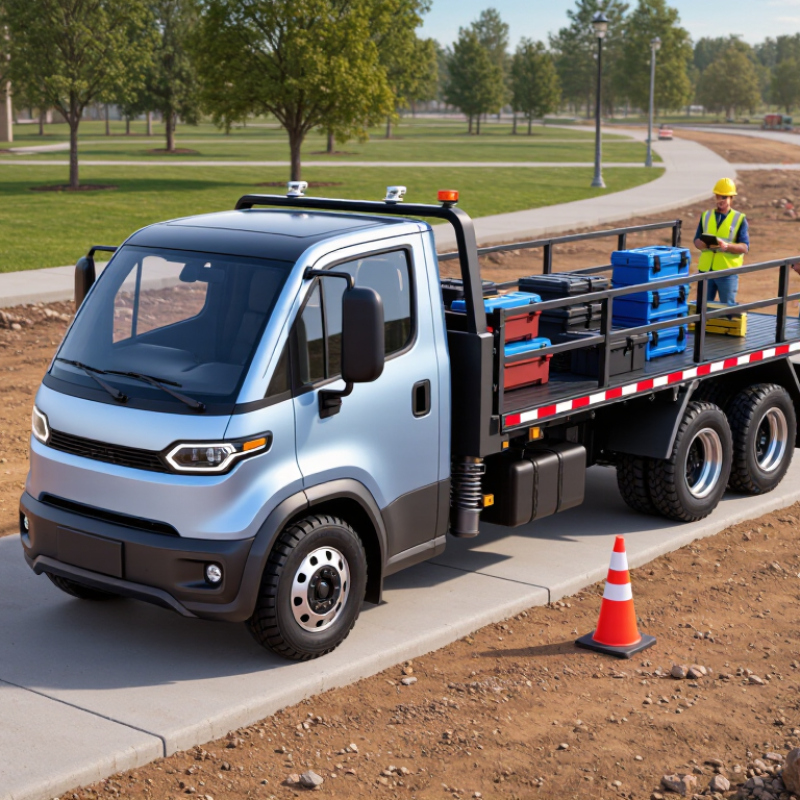
Choosing an electric utility vehicle starts with its job, not its appearance. Low-speed carts suit campuses, resorts, and private work areas. Cargo vans support parcel delivery and maintenance routes. Pickups handle tools, uneven ground, and moderate towing. Heavy electric trucks serve municipal collection and regional freight. Warehouse vehicles, including pallet movers and forklifts, need different batteries and charging schedules.
Match the vehicle to its daily duty cycle. Measure payload, route length, road surface, stop frequency, and idle time. The U.S. Department of Energy’s Alternative Fuels Data Center identifies vehicle range, charging access, and operating temperature as key fleet-planning factors. IEA’s Global EV Outlook 2024 reported more than 14 million electric car sales in 2023, showing fast market growth. Utility fleets still require closer checks. Big numbers can mislead.
Check usable range, not the brochure maximum. Include winter heating, hills, cargo weight, and traffic delays. Confirm battery charging speed and site electrical capacity. A vehicle returning every evening may need simple overnight charging. A two-shift fleet may need workplace charging or battery planning. Quiet operation helps campuses and hospitals, but pedestrians may hear the vehicle less clearly. Add safety procedures.
Review service access, tire wear, battery warranty terms, and replacement costs. The Electric Power Research Institute notes that managed charging can reduce demand peaks and improve fleet economics. That benefit depends on disciplined scheduling.
In practice, operators sometimes choose excessive battery capacity and carry unnecessary weight. I would reconsider that habit. A smaller vehicle may complete the route better, while a larger one may fail financially. Test the vehicle on a real route before purchasing several units.

Choosing the best electric utility vehicle starts with the worksite, not the brochure. Map daily routes, distances, gradients, surface conditions, and operating hours. Record the heaviest loads, passenger numbers, towing needs, and required ground clearance. A vehicle moving tools across concrete needs different capabilities from one crossing wet grass or loose gravel. The U.S. Department of Energy reports that electric drivetrains convert about 77–82% of electrical energy into wheel power, compared with 12–30% for conventional vehicles. That efficiency matters, but only when the vehicle matches its duty cycle.
Check charging access before selecting battery capacity. Measure available electrical capacity, installation distance, charging windows, and seasonal temperature changes. DOE’s Alternative Fuels Data Center recommends evaluating duty cycles, infrastructure, maintenance, and total operating costs together.
Do not estimate range from ideal conditions. Cold weather, steep ramps, heavy cargo, and frequent stops can reduce usable range. Build a reserve for delays. It may feel excessive.
Review braking performance, visibility, rollover protection, lighting, cabin ergonomics, and noise levels. Ask operators to test entry, controls, turning radius, and loading height. The International Energy Agency’s Global EV Outlook 2024 projected more than 17 million electric car sales worldwide in 2024, showing rapid market expansion. However, general adoption data cannot replace a site-specific trial. Use a representative route for several shifts, record energy use, charging time, payload changes, and operator feedback. A spreadsheet helps. Mud still decides.
10 Tips to Choose the Best Electric Utility Vehicle?
Comparing Range, Battery Capacity, Power, and Load Performance
Rated range is only a starting point. Measure your real route, including slopes, rough ground, repeated stops, and winter temperatures. A vehicle advertised for 100 kilometers may deliver much less under heavy loads. Leave a practical reserve of 15 to 20 percent. Running empty is not a useful test.
Battery capacity matters, but usable capacity matters more. Ask whether the stated figure is nominal or available to the driver. A larger battery can improve range, yet it may increase weight and charging time. Check the charging system, expected charging cycles, and replacement cost. A simple overnight charge may suit one operation, while multi-shift work needs faster recovery. Small detail. Big difference.
Power should be judged beside torque and load performance. Peak power looks impressive, but continuous power controls steady climbing and long work periods. Test the vehicle with its typical payload, not just a driver. Observe acceleration, braking, hill speed, and stability during turning. Payload should include tools, passengers, and loose materials. Distribute weight carefully. Overloading can reduce range and damage components. I would also test the vehicle after partial battery use, because performance may change. This is easy to overlook. Keep records from several working days, then compare energy use per trip rather than trusting one perfect demonstration.
Compare range, battery capacity, motor power, and payload performance across representative electric utility vehicle classes.
The chart uses a relative performance index, with the highest value in each category set to 100. Tooltips show the corresponding reference specification. The figures represent typical published specification levels for anonymous electric utility vehicle classes rather than any specific brand.
10 Tips to Choose the Best Electric Utility Vehicle
Tip 1: Inspect the braking system, emergency stop, lights, mirrors, and seat belts before comparing prices. Tip 2: Look for speed controls, reverse alarms, and clear driver visibility. Tip 3: Test stability on a slope, not only on a showroom floor. A quiet motor does not guarantee safe handling. I once underestimated turning space in a narrow warehouse.
Tip 4: Sit in the vehicle for at least ten minutes. Check legroom, seat support, steering position, and access to controls. Tip 5: Make sure passengers have secure handholds and enough shoulder space. Tip 6: Test the suspension over uneven ground. Comfort affects attention, especially during long work shifts. Small details matter.
Tip 7: Review the frame, battery enclosure, tires, and weather protection for durable construction. Tip 8: Ask for realistic load capacity, travel range, and charging time under working conditions. Advertised figures may change with hills, cold weather, and heavy cargo. Tip 9: Choose accessible service points, replaceable wear parts, and clear maintenance instructions. Tip 10: Confirm inspection schedules, battery care requirements, and technician support before purchase. A maintenance log helps, although many operators forget to update it. Compare total operating effort, not just the purchase cost.
| Tip | Assessment Area | What to Check | Practical Benchmark | Why It Matters | How to Verify |
|---|---|---|---|---|---|
| 1 | Safety Structure | Inspect the frame, roll-over protection structure, doors or side restraints, seat belts, mirrors, and lighting. | The vehicle should have a rigid occupant-protection structure, three-point belts where provided, adequate visibility, and working front, rear, brake, and indicator lights. | A stable structure and effective restraints help reduce injury risk during sudden stops, collisions, or rollovers. | Review the safety documentation and perform a slow-speed inspection before purchase. |
| 2 | Braking and Stability | Evaluate service brakes, parking brakes, tire grip, steering response, suspension, and the vehicle’s behavior on slopes. | Brakes should stop the loaded vehicle smoothly without pulling, while the parking brake should hold it securely on the manufacturer’s rated incline. | Reliable braking and predictable handling are essential when carrying loads or operating on uneven ground. | Conduct a loaded test drive on level and sloped surfaces within a controlled area. |
| 3 | Battery and Electrical Safety | Check battery chemistry, enclosure protection, charging controls, cable condition, ventilation requirements, and protection against overcharging. | The charger should be matched to the battery system and include appropriate safeguards; connectors should be protected from water, impact, and unauthorized use. | Correct charging reduces the risk of electrical faults, battery damage, overheating, and unexpected downtime. | Request the charging instructions, battery safety data, and ingress-protection information. |
| 4 | Ergonomics and Comfort | Assess seat adjustment, steering-wheel position, pedal layout, step-in height, legroom, vibration, noise, and weather protection. | The operator should be able to reach all controls without stretching, maintain a clear view, and enter or exit without excessive twisting or climbing. | Good ergonomics reduce fatigue and help operators maintain concentration during long shifts. | Have the primary operators complete a 20–30 minute test drive using normal work equipment. |
| 5 | Payload and Towing Capacity | Compare rated payload, cargo-bed dimensions, axle limits, towing capacity, ground clearance, and weight distribution. | Choose a vehicle whose rated capacity exceeds the heaviest routine load, including passengers, tools, cargo, and accessories. | Operating within ratings improves braking, handling, tire life, and structural reliability. | Calculate the actual operating load and compare it with the data plate and owner’s manual. |
| 6 | Range and Charging Time | Consider battery capacity, expected daily distance, terrain, payload, temperature, charging availability, and reserve energy. | Select a usable daily range that covers the planned route with a practical reserve rather than relying on the maximum advertised range. | Real-world range changes with load, speed, hills, cold weather, tire pressure, and accessory use. | Compare the manufacturer’s test conditions with your route and confirm charging time at your available power supply. |
| 7 | Durability and Environmental Protection | Examine corrosion protection, underbody shielding, suspension components, cargo-bed materials, seals, and resistance to dust or water. | Construction should match the operating environment, including outdoor storage, wet conditions, rough surfaces, dust, and frequent loading. | Suitable protection limits corrosion, water damage, impact damage, and premature component wear. | Inspect the underside, hinges, fasteners, wiring routes, and published environmental ratings. |
| 8 | Maintenance Requirements | Review service intervals for tires, brakes, suspension, steering, battery connections, coolant systems, and software diagnostics. | Routine inspection points should be accessible, clearly documented, and possible through qualified local service support. | Simple preventive maintenance helps control operating costs and reduces unexpected failures. | Request the maintenance schedule, labor requirements, replacement intervals, and diagnostic procedure. |
| 9 | Serviceability and Parts Support | Assess technician availability, spare-parts lead times, warranty coverage, battery replacement options, and roadside support. | Critical wear parts and safety components should have a documented supply process and an established warranty procedure. | Strong support reduces downtime and makes the vehicle more practical over its working life. | Obtain written warranty terms and ask for typical response times for service and parts. |
| 10 | Total Cost of Ownership | Calculate purchase cost, electricity, tires, scheduled maintenance, insurance, charging equipment, battery replacement, and expected service life. | Compare costs over the planned ownership period using actual electricity rates, annual operating hours, and local labor prices. | A lower purchase price may not provide the best value if energy use, downtime, or battery replacement costs are higher. | Build a three- to five-year cost comparison using conservative operating assumptions. |
Choosing the best electric utility vehicle starts with total cost, not its purchase price. Compare acquisition, financing, insurance, tires, maintenance, electricity, and resale value over five years.
The U.S. Department of Energy reports that electric drivetrains convert more than 77% of electrical energy into wheel power, compared with about 12–30% for gasoline vehicles. That efficiency can reduce daily operating costs, especially on stop-and-go routes.
Charging design matters just as much. A depot with overnight Level 2 charging may suit predictable municipal or campus work. A vehicle covering several shifts may need DC fast charging, upgraded electrical service, and scheduled load management.
The DOE Alternative Fuels Data Center explains that charging speed depends on equipment, battery size, temperature, and vehicle limits. One fast charger is not a complete strategy. Add backup planning.
Long-term value also depends on battery health and working conditions. Geotab’s 2024 battery report, based on more than 10,000 vehicles, found average degradation near 1.8% annually. Heavy payloads, heat, and frequent high-power charging can change that result.
Review warranty terms, usable battery capacity, payload after battery weight, and service availability. Ask for real route data, not optimistic estimates. A spreadsheet can still lie.
Leave room for winter range loss, unexpected downtime, and electricity-price changes. The IEA’s Global EV Outlook 2024 also shows continued growth in electric commercial transport, but infrastructure remains uneven across regions. Long-term value is local, practical, and sometimes less perfect than the brochure.
Our Off-grid experts will come back with recommendations

Stay up to date with Leading Edge innovations and offers by joining our mailing list. Occassionally we send informative newsletters, offers and promotions that we think you'll find useful or interesting.