7 Tips for Choosing the Best Inverter Voltage Stabilizer
Voltage problems often appear as small annoyances before they become costly: lights flicker, a pump struggles to start, or a refrigerator makes an unusual sound. An Inverter Voltage Stabilizer can help protect compatible equipment by adjusting voltage when the supply varies. But choosing one by price or advertised capacity alone is risky. The right model depends on your local voltage conditions, connected appliances, and installation environment.
Start with the equipment nameplates and the stabilizer’s technical specifications. Check its input-voltage range, rated output, load capacity, and response characteristics. Motors and compressors may draw extra current during startup, so a unit that matches only their running wattage could be undersized. Leave a sensible capacity margin, and confirm that the manufacturer supports the type of load you plan to connect. Small details matter.
Protection features also deserve a close look. Overload, overvoltage, undervoltage, and thermal protection can reduce avoidable equipment stress, though no stabilizer fixes every power-quality issue. Installation, ventilation, warranty terms, and access to qualified service matter too. A crowded cabinet or poor airflow can undermine an otherwise suitable product. I would verify claims against the product manual and actual site conditions rather than trusting a prominent label. Even experienced buyers can miss a specification. These seven tips will help you compare models carefully, ask better questions, and choose an Inverter Voltage Stabilizer that fits your equipment instead of simply looking impressive on paper.
Understand How an Inverter Voltage Stabilizer Works
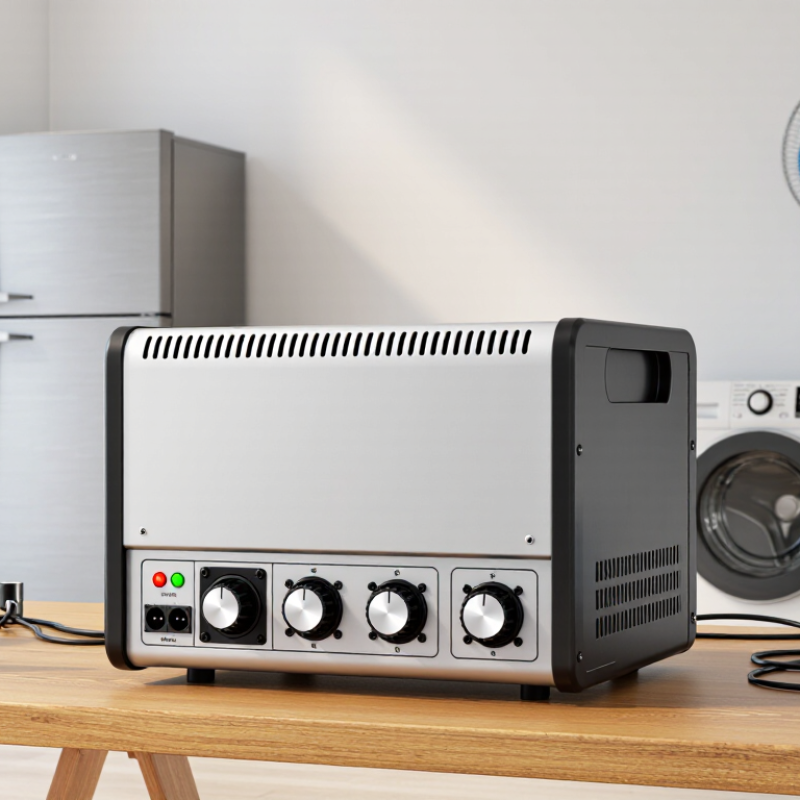
An inverter voltage stabilizer monitors incoming AC power and corrects voltage before it reaches sensitive equipment. A sensing circuit compares the supply with a target range. If voltage falls, electronic switches or a buck-boost transformer can raise it; if it rises, the stabilizer reduces it. The corrected AC may then feed the inverter’s charger and DC bus. During an outage, the inverter converts battery DC back into AC. The exact sequence depends on the unit’s design, so check its wiring diagram rather than assuming every model works alike.
Small changes matter. IEEE Std 1159-2019 defines a voltage sag as an RMS reduction to 0.1–0.9 per unit, lasting from half a cycle to one minute. That brief dip can make a motor slow or cause electronics to reset. A stabilizer responds to voltage, not every power-quality problem; it may not correct frequency shifts or waveform distortion. Measure the voltage at the equipment under real load, not just at an empty outlet. That distinction is easy to miss. Also, a stabilizer can introduce a short correction delay, and its own capacity may be exceeded by a motor’s startup surge. Real installations vary, so leave room for doubt and verify performance with suitable test equipment.
Assess Your Inverter, Appliances, and Local Voltage Conditions
Before choosing an inverter voltage stabilizer, check the inverter’s rated capacity, output type, and permitted input-voltage range. Then list the appliances you expect to run at the same time. A refrigerator or pump may draw extra power when starting, even if its normal running load seems modest. Compare both running and startup demands with the inverter’s specifications. Small details matter.
Tip 1: Measure your local voltage at different times of day. A basic meter can reveal whether voltage dips mostly in the evening or fluctuates throughout the day. Choose a stabilizer whose correction range covers the conditions you actually observe, not just a number printed on a general chart. If readings vary widely, repeat the checks; one afternoon may not tell the whole story.
Tip 2: Match the stabilizer’s capacity to the inverter and connected load, while allowing for startup surges. Confirm that its output suits the inverter and appliances, and check whether it supports the required frequency and waveform. Installation conditions matter too: heat, dust, and poor ventilation can affect performance. It is easy to focus on capacity and overlook these practical details. When specifications are unclear, ask a qualified technician to verify compatibility before connecting equipment.
Match Stabilizer Capacity and Technology to Your Power Needs
Choose an inverter voltage stabilizer by measuring the load it must protect, not by guessing from room size. Add the running wattage of connected appliances, then allow extra capacity for brief startup surges. A refrigerator compressor or water pump can draw much more power for a moment than its label suggests. Check the manufacturer’s stated VA or watt rating and its permitted overload duration. Check the label.
Also confirm the stabilizer’s input-voltage range against the lowest and highest readings at your outlet. If voltage regularly falls far below that range, the unit may not provide the protection you expect. Leave a practical capacity margin, but avoid buying a much larger unit without checking its efficiency and minimum-load requirements. This is an easy detail to overlook.
Technology should suit the equipment and how often voltage fluctuates. Relay models switch between set levels and can work well for moderate changes. Servo-controlled types adjust more gradually, while electronic designs can respond quickly; their performance and costs vary. For sensitive electronics, check output accuracy and compatibility with the inverter’s specifications. For motors, prioritize surge handling. Before purchase, record outlet voltage at different times and compare it with the stabilizer’s documented limits. If the figures are unclear, ask a qualified technician to assess the load and wiring.
Compare Protection Features, Efficiency, and Build Quality
Tip 1: Check the protection features against your equipment’s needs. Look for overload, overheating, and short-circuit protection, plus a clear response to high or low input voltage. Tip 2: Match the stabilizer’s capacity to the combined load, including brief startup surges from motors or pumps. A small margin helps, but oversizing without reason can add cost. Keep the appliance manuals nearby.
Tip 3: Compare efficiency figures at realistic loads, not just a best-case rating. Losses may create extra heat and modest running costs over time. Tip 4: Inspect build quality closely. Solid terminals, secure wiring, ventilation openings, and a sturdy enclosure matter in a warm utility room. Keep it dry. Dust buildup can still become a problem. Tip 5: Check the display and controls; voltage readings should be easy to understand.
Tip 6: Consider service access, warranty terms, and replacement parts before buying. These details are easy to overlook. Tip 7: Read the installation requirements and ask a qualified electrician if wiring or grounding is unclear. A stabilizer cannot fix every supply problem, and protection claims vary by model. Compare specifications carefully; I would not choose by price alone, though a higher price does not guarantee better protection.
Check Installation Requirements, Warranty, and Ongoing Support
Before choosing an inverter voltage stabilizer, check its input-voltage range, output accuracy, phase, and rated capacity against your actual load. Include motor-starting surges, not just the steady wattage on equipment labels. Confirm available space, airflow, cable size, earthing, and whether the unit needs a dedicated circuit. A narrow cabinet can trap heat. Ask the installer to record measured voltage and load conditions before commissioning. Uptime Institute’s 2024 Annual Outage Analysis reported that 54% of respondents’ most recent significant outages cost over $100,000. That finding concerns data-center outages, not stabilizer performance, but it shows why installation planning and reliable service deserve attention. A stabilizer cannot prevent every outage.
Read the warranty’s exact terms. Check whether it covers parts, labor, transport, and damage caused by voltage events; these details vary. Ask what proof of professional installation is required, and whether routine inspection affects coverage. Get the service response process in writing: who answers, what information they need, and how quickly a technician can attend. Keep the commissioning report and warranty documents near the unit. Small detail. Big difference. I have seen buyers focus on the warranty length and miss exclusions; that is an easy mistake to make. Confirm spare-part availability and support hours before purchase, especially if the stabilizer serves equipment that cannot sit idle.