

Choosing the right Battery Storage System is no longer a simple equipment purchase. It is a long-term energy decision. The best option depends on your site, electricity demand, budget, and safety expectations. A small home system may prioritize compact design and backup power. A commercial facility may need higher capacity, rapid response, and reliable thermal management.
Dr. Imre Gyuk, a respected energy storage expert, has said, “Energy storage is the key to unlocking the full potential of renewable energy.” That idea guides this article. Storage can capture excess solar power at noon and release it after sunset. Yet performance claims need careful examination. Battery chemistry, usable capacity, cycle life, warranty terms, and installation conditions can change the real value. Marketing numbers often look better than daily results.
Details matter.
These ten practical tips will help readers compare systems with greater confidence. They will examine power ratings, energy capacity, safety controls, monitoring software, maintenance needs, and future expansion. They will also consider how temperature affects battery performance. A garage in Arizona does not provide the same operating conditions as a basement in Norway. Neither does every installer offer equal expertise.
There is no perfect system. That is worth admitting. A cheaper battery may reduce upfront pressure, but replacement costs could appear sooner. A larger system may provide comfort, yet remain underused. Careful buyers should review actual load data, ask precise questions, and compare independent specifications. The goal is not to choose the most impressive Battery Storage System. It is to choose one that performs reliably in real conditions.
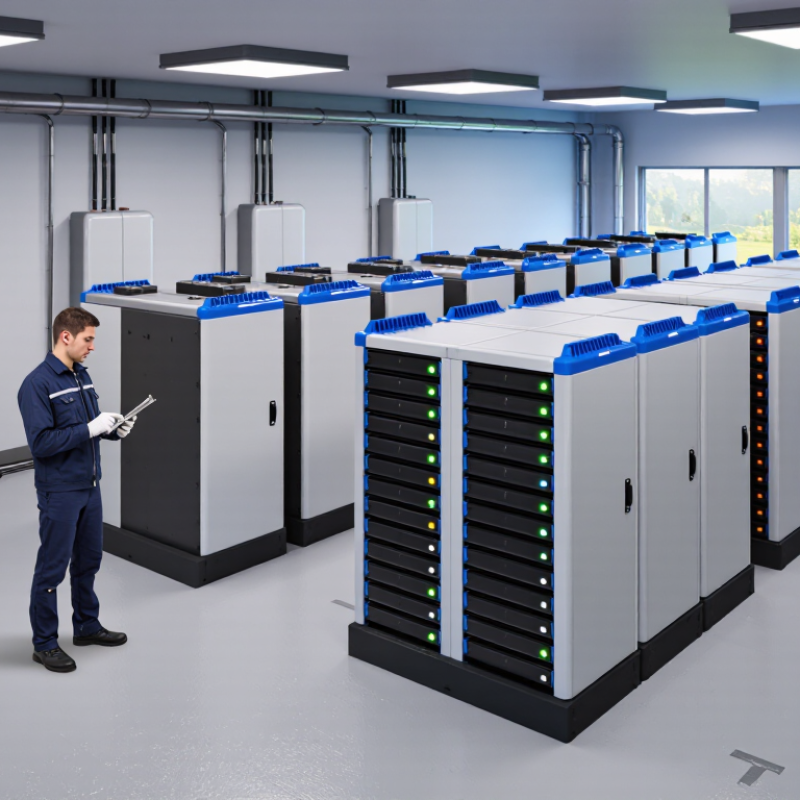
Choosing the right battery storage system begins with its chemistry and daily task. Lithium-ion systems suit frequent cycling, compact sites, and fast response. Their round-trip efficiency often reaches 85–95%. Flow batteries usually provide longer discharge periods and lower fire risk, but they need more space. Lead-acid systems remain practical for backup use, although deeper cycling can shorten their service life. Sodium-ion technology is developing, yet its commercial track record is still limited. Match the chemistry to the duty cycle, not the headline capacity.
Applications differ sharply. A household system may store midday solar power for evening cooking and lighting. Commercial systems can reduce demand charges during a factory’s busiest hour. Utility-scale projects often support grid balancing, renewable integration, and four-hour energy shifting. The International Energy Agency reported that global battery storage additions reached about 42 GW in 2023, more than doubling from 2022. The same report indicates that battery capacity must expand roughly sixfold by 2030 under clean-energy targets.
Check usable energy, power rating, degradation, temperature range, and maintenance access. A 100-kWh nameplate may deliver less after reserve limits and conversion losses. NREL’s 2024 Annual Technology Baseline treats four-hour storage as a key utility benchmark, but actual economics depend on duration and cycling. Compare total lifetime cost, not only purchase price. Safety testing, monitoring quality, and installer experience also matter. A neat spreadsheet can still mislead. Site conditions often expose the missing assumption.
Battery chemistry affects efficiency, service life, response speed, maintenance, and the applications a system can support. The chart below shows representative round-trip efficiency ranges for common stationary battery storage technologies.
Note: Values are representative industry ranges for stationary energy storage. Actual performance depends on system design, operating temperature, depth of discharge, power rating, and operating conditions.
Choosing a battery system starts with understanding how your property uses energy each day. Review twelve months of utility bills, then compare them with hourly consumption data. Daily totals show energy use, but they hide important peaks. A home may consume 18 kilowatt-hours daily yet require 7 kilowatts during cooking and heating. Capacity and power are different requirements.
List the appliances that need backup during an outage. Refrigerators, medical equipment, pumps, lights, and communication devices may need priority. Estimate their running loads and starting surges. Then decide how long they must operate. A 10-kilowatt-hour battery will not deliver 10 usable kilowatt-hours after conversion losses and reserve limits. Allow for depth of discharge, round-trip efficiency, temperature, and battery aging. Real conditions matter.
My early estimates were too optimistic. I counted average usage and ignored cloudy winter days. That mistake could leave a system undersized when demand is highest. Add a practical margin, but avoid buying excessive capacity without evidence. Future electric heating, vehicle charging, or home expansion can change the calculation. An experienced installer should verify load measurements, electrical compatibility, ventilation, emergency circuits, and local safety requirements. Ask for written assumptions and performance figures. Vague promises are not enough. Recheck the numbers.
Choosing a battery storage system requires more than comparing its price. In field assessments, chemistry often shapes safety, usable capacity, maintenance, and lifespan. Lithium iron phosphate batteries usually offer strong thermal stability and many cycles. Other lithium chemistries can provide higher energy density, but temperature control becomes more important. Lead-acid systems may cost less initially, yet frequent deep discharge can shorten their service life. The cheapest option is not always economical.
Tip 1: Match chemistry with your climate and installation space.
Tip 2: Compare usable capacity, not only the advertised capacity.
Tip 3: Check round-trip efficiency, which shows how much stored energy returns to your home.
Tip 4: Review performance at partial charge, because real systems rarely operate fully charged.
Tip 5: Ask for cycle-life data at your expected depth of discharge. More cycles help.
Tip 6: Examine the warranty conditions carefully, including temperature and daily-use limits.
Efficiency numbers can look impressive on paper. In practice, inverters, cables, standby controls, and cold weather reduce output.
Tip 7: Request measured efficiency under realistic loads.
Tip 8: Confirm whether the Battery Management System limits charging during heat or frost.
Tip 9: Leave room for ventilation, inspection, and future replacement.
Tip 10: Compare degradation rates, not just the first-year specification.
I have seen systems lose useful capacity faster than expected when installers ignored heat and oversized daily demand. That warning is easy to overlook.
Lifespan estimates are not promises; they depend on operating habits, temperature, charging limits, and maintenance records.
Choosing a battery storage system requires more than comparing capacity and price. Safety begins with the enclosure. Look for overcurrent protection, temperature monitoring, automatic shutdown, and a clearly labeled disconnect. A battery room should stay dry, shaded, and free from clutter. Keep combustible materials away from the unit. Small details matter. During site inspections, I check cable routes for abrasion, loose terminals, and sharp bends. These faults are easy to miss during a quick installation, yet they can create heat at connection points. Ask whether the system provides audible alerts and remote fault reporting. Test both before commissioning.
Installation needs depend on the building, not only the battery. Confirm the floor or wall can support its weight, and leave the clearances specified in the technical documentation. Outdoor installations may need protection from rain, flooding, dust, and direct sunlight. Indoor systems may require ventilation or a dedicated fire-resistant space, depending on the design and local requirements. A qualified installer should assess the main panel, cable length, earthing, and emergency access. Do not hide the disconnect behind stored boxes. That mistake happens. It makes maintenance slower and emergency isolation harder.
Compatibility is where many attractive proposals fail. Match the battery voltage range with the inverter and confirm charging limits at expected temperatures. Check communication protocols, firmware requirements, backup-load ratings, and maximum continuous current. A system may store enough energy but still reject a particular inverter. Request written compatibility data, not a verbal promise. Review the monitoring screen during a live test; the displayed state of charge should respond realistically to changing loads. I once assumed a larger battery would solve every outage problem. It did not. Load priorities, startup surges, and aging capacity mattered more than the advertised size. Keep those records for future service.
10 Tips for Choosing the Right Battery Storage System
The lowest quote is rarely the lowest lifetime cost. The IEA reported that lithium-ion battery pack prices fell 14% in 2023, yet installation costs remain highly site-dependent. Compare usable kilowatt-hours, round-trip efficiency, software fees, permitting, and replacement labor. A spreadsheet can still lie. Ask for a five-year cash-flow model using your actual load profile, not a generic household example. Include demand charges, outage value, and expected cycling frequency.
Read the warranty line by line. Check calendar years, energy throughput, retained capacity, response time, and exclusions for temperature or improper operation. A “ten-year warranty” may promise only 60% capacity at year ten. That could be disappointing. Lazard’s Levelized Cost of Storage analysis shows that storage economics vary widely by application and duration. Therefore, a short-duration system may not suit evening peak demand or longer outages. Request independent test results and written service-response commitments.
Maintenance is usually modest, but it is not zero. Inspect ventilation, firmware records, electrical connections, and event logs at scheduled intervals. Ask who pays for travel and parts after installation. Plan expansion before signing: reserve wall space, switchgear capacity, network connections, and compatible battery modules. NREL’s 2024 Annual Technology Baseline highlights continuing cost reductions, but future modules may not match today’s controls. Buying extra capacity now can waste money; ignoring expansion can create expensive redesigns. Reflect honestly on uncertainty. Load forecasts are imperfect.
| Tip | Evaluation Dimension | Reference Data and Typical Values | Questions to Ask the Installer | Positive Decision Signal |
|---|---|---|---|---|
| 1 | Match Capacity to Your Load | Review daily electricity use, peak demand, and outage duration. A home battery commonly provides approximately 5–20 kWh of usable energy, while small commercial systems are often measured in tens or hundreds of kWh. | What is my average daily consumption? Which essential circuits must operate during an outage? What is the expected backup duration? | The proposed usable capacity is based on measured consumption rather than a standard package size. |
| 2 | Check Power Output | Energy capacity is measured in kWh; instantaneous output is measured in kW. Backup systems may require approximately 3–10 kW for typical residential essential loads, with higher power needed for pumps, compressors, or electric heating. | What is the continuous output? What is the short-term surge rating? Can the system start motors and refrigeration equipment? | Continuous and surge ratings cover the calculated starting and running loads. |
| 3 | Compare Total Installed Cost | Compare the complete installed price, including battery modules, inverter or power-conversion equipment, controls, labor, permits, balance-of-system components, and taxes. Residential installed costs commonly vary by project size and region and may range from roughly $700 to $1,500 per usable kWh before incentives. | Which items are included or excluded? Are permitting, electrical upgrades, commissioning, and disposal covered? Are incentives deducted or shown separately? | Quotes use the same basis, such as cost per usable kWh and cost per delivered kW. |
| 4 | Evaluate Round-Trip Efficiency | Round-trip efficiency represents the energy recovered after charging and discharging. Modern lithium-ion systems commonly report approximately 85%–95%, depending on operating conditions and whether auxiliary loads are included. | Is the efficiency AC-to-AC or DC-to-DC? Does the published figure include standby consumption, cooling, and inverter losses? | The quoted efficiency uses a clearly defined test method and operating range. |
| 5 | Review Battery Chemistry and Safety | Lithium iron phosphate (LFP) chemistry is widely used because of its thermal stability and long cycle life. Depending on depth of discharge, temperature, and operating profile, LFP systems may be rated for approximately 3,000–8,000 cycles. | What chemistry is used? What thermal controls and fault detection are included? Which safety standards and local installation requirements apply? | The system has documented safety testing, clear installation spacing, and appropriate certifications for the target jurisdiction. |
| 6 | Read the Warranty Carefully | Battery warranties commonly last 10 years, but coverage may also be limited by energy throughput, cycle count, operating temperature, or an end-of-warranty capacity level. Capacity guarantees are often stated around 60%–80%, depending on the product and conditions. | Is the warranty measured by years, cycles, throughput, or all three? Who performs service? Are labor, shipping, replacement parts, and software support included? | The warranty clearly defines capacity retention, throughput limits, exclusions, response times, and transferability. |
| 7 | Estimate Maintenance Requirements | Most sealed lithium-ion systems require limited routine maintenance, but inspections, firmware updates, ventilation checks, fault monitoring, and occasional inverter or cooling-system service may still be necessary. | What annual inspection is recommended? Are software updates automatic? What components have shorter service lives than the battery modules? | The owner receives a written maintenance schedule and a defined process for remote and on-site support. |
| 8 | Verify Solar and Grid Compatibility | Some systems are AC-coupled, some are DC-coupled, and hybrid systems can use both approaches. Compatibility affects conversion losses, backup operation, retrofit complexity, and how solar production is managed during a grid outage. | Can the battery be added to my existing solar installation? Will it provide backup when the grid is down? Does it support time-of-use billing or export control? | The architecture is documented, compatible with the existing electrical equipment, and aligned with the utility interconnection rules. |
| 9 | Plan for Future Expansion | Expansion depends on inverter capacity, battery-management-system limits, available installation space, electrical service capacity, and approved module combinations. Mixing different ages, chemistries, or unsupported models can reduce performance and may void warranty coverage. | How many modules can be added? Until when will compatible modules be available? Can expansion use the existing inverter, wiring, and controls? | The system has documented expansion limits and a practical upgrade path without replacing major components. |
| 10 | Calculate Lifetime Value | Compare usable energy, efficiency, degradation, warranty limits, maintenance, replacement risk, and expected operating cycles. A simple comparison is total lifetime cost divided by the estimated lifetime energy delivered, while also considering backup value and demand-charge savings. | What annual savings are expected under my tariff? What degradation rate is assumed? When is replacement likely? What happens if electricity prices or export compensation change? | The financial model shows assumptions, sensitivity to tariff changes, and conservative degradation estimates rather than relying only on payback period. |
Reference note: Cost ranges and technical values are typical planning ranges, not guaranteed quotations. Actual performance, pricing, warranty coverage, and permitted installation methods vary by system design, climate, utility requirements, local codes, and operating conditions.
Our Off-grid experts will come back with recommendations

Stay up to date with Leading Edge innovations and offers by joining our mailing list. Occassionally we send informative newsletters, offers and promotions that we think you'll find useful or interesting.