


Blog

China Top Cellulose Fiber Suppliers for Global Buyers?

China is a major sourcing option for buyers comparing cellulose-based materials, yet the “top” supplier depends on the intended use. Cellulose Fiber may be used in apparel, home textiles, nonwovens, and other products. Each application brings different requirements. A clothing brand may prioritize softness, color consistency, and a dependable hand feel. A nonwoven producer may focus more on fiber specifications, process compatibility, and steady shipment schedules.

Details matter. Supplier directories and product pages can help buyers build an initial shortlist, but they do not replace direct verification. Ask for current technical data sheets, sample lots, production capacity, and clear information about fiber type and origin. Where relevant, review quality-management documents and certifications, checking their scope and validity rather than relying on a logo alone. Confirm lead times, packaging, minimum order quantities, and how specification changes are handled. These practical checks can reveal gaps that a polished catalogue may not show.

A neat ranking can still mislead. Suppliers differ in product range, export experience, and ability to support a particular order size, and public information may be incomplete or outdated. This guide examines how global buyers can compare Chinese Cellulose Fiber suppliers using application fit, documented quality, communication, and supply reliability. It is a starting point, not a substitute for audits or trial orders. Samples can vary. A careful comparison helps buyers identify promising partners while leaving room to reassess assumptions before committing to larger volumes.
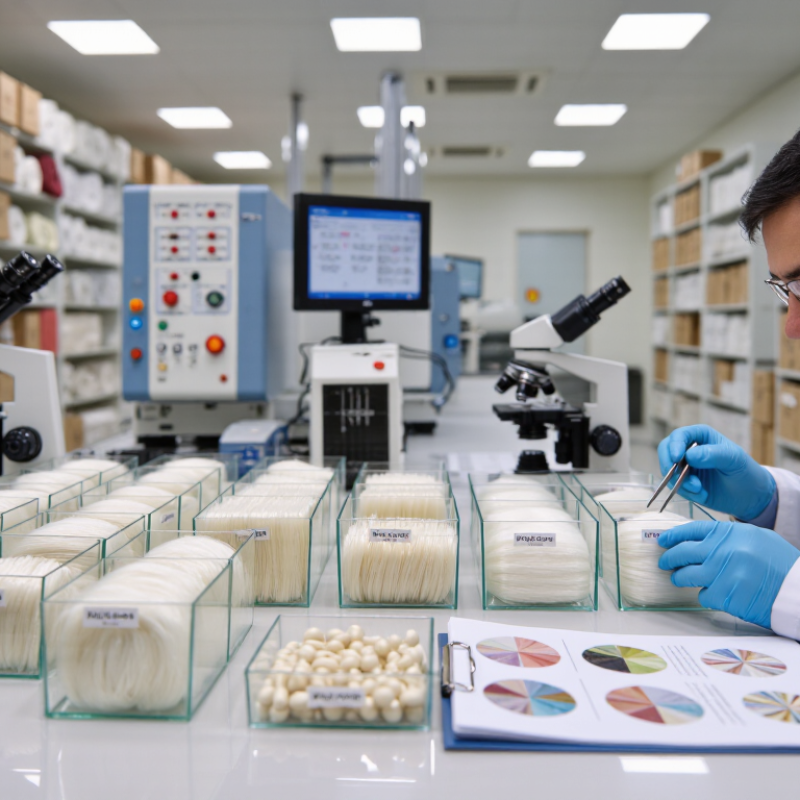
China Top Cellulose Fiber Suppliers for Global Buyers?

Cellulose Fiber Types Supplied by Chinese Manufacturers

Chinese manufacturers supply several cellulose-fiber types, each suited to different fabric needs. Viscose staple fiber is widely used in soft apparel and nonwovens; it drapes well but can lose strength when wet. Lyocell offers a smooth hand and good moisture management, while modal is often selected for soft, washable garments. Some suppliers also make acetate or specialty cellulose fibers, though availability and specifications vary by mill.

Textile Exchange’s Materials Market Report 2023 estimated global manmade cellulosic fiber production at about 7.9 million tonnes in 2022, out of roughly 116 million tonnes of total fiber production. That figure shows the category’s scale, not the capacity or quality of any individual supplier. For buyers comparing Chinese sources, check fiber length, denier, moisture regain, strength, and batch consistency. Request recent test reports and sample yarn or fabric before approving a specification. A small but important detail: “cellulose-based” does not mean every fiber behaves the same in dyeing or finishing.

Tips: Ask suppliers to identify the fiber process and provide traceable production data. Confirm whether quoted values are typical results or guaranteed limits. Sample testing can reveal issues that a neat datasheet misses.
Key Applications and Specifications for Global Buyers

Cellulose fiber is used in paper reinforcement, nonwoven wipes, filtration media, and some building materials. Each application needs a different balance of strength, absorbency, and fiber length. For example, a wipe may need quick liquid uptake, while a filter needs consistent pore structure. Small details matter. Buyers should ask for fiber length and diameter ranges, moisture content, ash level, and brightness where appearance matters. For process-sensitive uses, dispersibility and surface treatment can be just as important as purity.

Specifications are useful only when the test methods are clear. Ask suppliers to identify sampling procedures and provide recent batch test reports. A stated moisture limit, for instance, can mean little if measurement conditions differ. This is easy to overlook. Confirm packaging, storage conditions, and whether fibers remain free-flowing after transport. A neat datasheet does not prove performance on a production line. Requesting a representative sample and running a small process trial can reveal clumping, uneven feeding, or unexpected dust. The trial may not predict every production issue, but it gives buyers practical evidence before placing a larger order.

How to Evaluate China-Based Cellulose Fiber Suppliers

How to Evaluate China-Based Cellulose Fiber Suppliers

Start with the fiber’s intended use: apparel, wipes, or industrial textiles need different strength, absorbency, and finish. Ask suppliers for the exact fiber type, staple length, moisture regain, and test methods. Then request recent, lot-specific test reports—not only a polished sample. A 2024 Textile Exchange Materials Market Report estimated global man-made cellulosic fiber production at 7.9 million tonnes in 2023, within a 124-million-tonne global fiber market. This scale makes clear documentation important, but it does not prove any individual supplier’s quality. Small details matter.

Check whether a supplier can trace pulp origin and explain its chain-of-custody records. Verify certificates directly with the issuing body, and confirm that the certificate covers the facility and product being quoted. Compare specifications against your own lab tests, including wet strength and color consistency. Ask for production lead times, minimum order quantities, and procedures for handling rejected lots. A factory visit or independent audit can reveal practical gaps, such as inconsistent labeling between sample and bulk cartons. I would not treat a low price as a warning by itself; I would ask what it excludes.

Tips: Send the same written specification to at least three suppliers. Request a small trial lot, retain sealed reference samples, and record test results by batch. If a claim sounds unusually broad, ask for supporting documents before placing a large order.

Comparing Supplier Quality, Capacity, and Certifications

China’s cellulose fiber suppliers can differ widely in quality control, production capacity, and documentation. Compare more than quoted prices. Ask for recent batch records, a product specification sheet, and a sample that matches the grade you plan to buy. Check relevant measures such as moisture, brightness, viscosity, or fiber length. The right tests depend on the intended application. Ask for evidence.

Capacity needs practical verification. Request typical monthly output, current lead times, and details about how the supplier handles maintenance or raw-material delays. A large stated capacity does not guarantee an order will ship on time. Compare promised delivery dates with past shipment records, where available. A spreadsheet can look reassuring, but it cannot reveal every production delay.

Tips: Confirm which certifications apply to the product and facility, then verify their scope and validity with the issuing body. Quality-management certification may support consistent processes; responsible-sourcing certification matters when traceability is required. Do not assume every certificate covers every fiber grade. I would also request a pre-shipment inspection for early orders. It adds time and cost, and even then, one inspection cannot guarantee every future batch will match.

China Top Cellulose Fiber Suppliers for Global Buyers? - Comparing Supplier Quality, Capacity, and Certifications

Supplier-level capacity and certification details vary by factory and require direct verification. This comparison summarizes common cellulose-fiber categories and the evidence buyers can request; it does not rank or identify individual suppliers.

Supplier Product Category Material and Process Quality Checks to Compare Capacity Evidence to Request Relevant Documentation Buyer Considerations
Viscose staple fiber Regenerated cellulose produced through the viscose process; supplied in staple or filament forms. Fiber fineness and length, tensile properties, moisture regain, color or whiteness, and consistency between batches. Ask for rated annual output by product grade, recent production records, operating shifts, and current order lead time. Capacity is supplier-specific. Current technical data sheet, batch test reports, and valid ISO 9001 certificate if claimed. ISO 9001 relates to quality management, not a guarantee of fiber performance. Compare agreed specifications and batch-to-batch results; do not infer quality from fiber category alone.
Modal fiber A type of regenerated cellulose fiber made using a modified viscose process. Performance depends on the grade and manufacturer’s specifications. Dry and wet tensile properties, fineness, length, shrinkage, color consistency, and test method used. Request product-specific rated capacity, actual output for the previous 12 months, and evidence that the quoted line produces the offered grade. Technical data sheet, test methods and results, traceability documents, and applicable management-system certificates with scope and validity dates. Use side-by-side samples and the same test conditions when comparing offers from different producers.
Lyocell fiber Regenerated cellulose produced by solvent spinning using an amine-oxide solvent system; process details and product grades vary by manufacturer. Fineness, fiber length, tensile properties, fibrillation behavior where relevant, moisture content, and lot consistency. Verify plant-level output and available capacity for the exact grade, plus production schedules and delivery lead times. No capacity figure can be assigned to the category itself. Product specification, recent batch reports, feedstock traceability information where required, and environmental-management documentation if claimed. Request written confirmation of the process and grade; do not treat a fiber name alone as proof of a particular environmental profile.
Bamboo-derived viscose Viscose fiber made from bamboo-derived cellulose. Bamboo feedstock does not, by itself, mean the fiber was made by a lyocell process. Fiber properties against the buyer’s specification, batch consistency, and documentation supporting the stated raw-material source. Request output records for the specific bamboo-derived grade and clarify whether production is in-house or outsourced. Technical data, batch test reports, and credible supply-chain or feedstock-origin records where origin claims matter. Distinguish verified feedstock-origin information from claims about the manufacturing process or environmental impact.
Certification and capacity note: ISO 9001 and ISO 14001 address management systems within their certified scope; neither is a product-performance certificate or proof of production capacity. Check the issuing body, certificate scope, site address, and expiry date. Confirm capacity with dated, product-specific records and verify quality through samples and independent testing where appropriate.

Sourcing, Shipping, and Import Compliance Considerations

When evaluating Chinese cellulose fiber suppliers, define the grade before comparing prices. Specify fiber length, moisture range, whiteness, and end use, then request a current technical data sheet and representative sample. Check that the sample matches the quoted production grade. Small differences matter.

Ask how the supplier controls batch variation and reports test results. Request recent inspection records, production lead times, minimum order quantities, and a clear process for handling rejected goods. Confirm whether the quotation covers export packaging and inland transport. A low unit price can change after these costs appear.

Shipping details deserve equal attention. Cellulose fiber can absorb moisture, so confirm sealed inner packaging, pallet protection, and container condition before loading. Agree on the shipment date, port, Incoterms, and who arranges cargo insurance. Keep the commercial invoice, packing list, and transport document consistent. That sounds basic. It is often where delays begin. Before shipment, have a customs broker review the product description and tariff classification for the destination market. Check whether local rules require a safety data sheet, origin documentation, labeling, or other product records. Requirements vary by country and fiber application, so verify them with the relevant authorities. Paperwork can still be incomplete despite careful planning; build time for corrections into the delivery schedule.

EU Formaldehyde Limits for Textile Articles

A practical import-compliance check for buyers sourcing cellulose-fiber textiles. Limits shown are formaldehyde concentration thresholds under EU REACH Annex XVII, Entry 72.

Before shipment, confirm the destination-market requirements and request relevant test reports for the finished article. Source: EU REACH Annex XVII, Entry 72 (Commission Regulation (EU) 2018/1513); these limits have applied since 1 November 2023.

Tell us about your project

Our Off-grid experts will come back with recommendations

x
Can we help?
Leading Edge
Off-Grid Power Requirements
Leading Edge
Sign Up To Receive Our Newsletter

Stay up to date with Leading Edge innovations and offers by joining our mailing list. Occassionally we send informative newsletters, offers and promotions that we think you'll find useful or interesting.