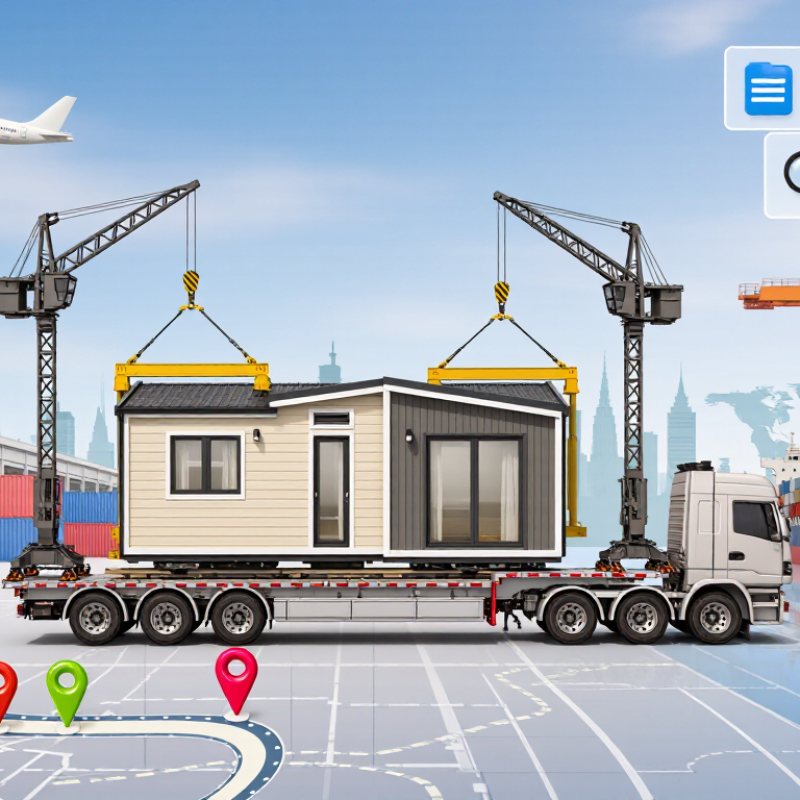
Buying a tiny house across borders sounds simple until wheels, permits, and customs documents enter the picture. Tiny House Moving requires more than a truck and a destination address. The structure may need route surveys, lifting equipment, marine transport, temporary storage, and local installation support. A narrow bridge or low cable can change the entire plan.
This guide examines top moving services for global buyers through practical, trust-focused criteria. Important factors include proven experience with oversized residential units, transparent quotations, cargo insurance, tracking updates, and partnerships with qualified local carriers. Reliable providers should explain weight limits, loading methods, delivery timelines, and possible port delays in clear language. They should also confirm whether the buyer needs transport permits, import paperwork, foundation approval, or utility inspections. Requirements differ by country and region.
No mover is perfect.
Even careful estimates can change after a site inspection or weather disruption. Buyers should request written contracts and verify licenses through relevant authorities before paying deposits. Photos of previous projects can help, but they do not replace references, insurance confirmation, or a detailed moving plan. A responsible service will discuss legal requirements openly and refuse unsafe shortcuts. This comparison aims to help buyers ask better questions, reduce avoidable costs, and choose a moving partner suited to the house, route, and final location. Some uncertainty remains. That is normal. Good planning makes it manageable.
Global buyers need more than a truck for tiny house delivery. Moving services coordinate factory collection, port transfer, ocean freight, customs paperwork, and final placement. They also check dimensions, lifting points, axle limits, and local access. A 3.5-meter-wide unit may fit a rural road, but fail at a narrow village turn.
The UNCTAD Review of Maritime Transport 2024 reports that ships carry over 80% of global merchandise trade by volume. This makes container planning and port coordination important, even for one small home. The World Bank’s Logistics Performance Index 2023 also highlights customs, infrastructure, and shipment reliability as major logistics factors. Experienced movers use these indicators when comparing routes. However, reports cannot predict every delay. Weather, port congestion, or incomplete documents can still disrupt delivery. I would not trust the cheapest quote alone.
Tips: Request a written door-to-door scope. Confirm whether lifting equipment, storage, insurance, permits, and site preparation are included. Measure the route personally, including bridges, gates, slopes, and overhead cables. Ask for cargo dimensions, estimated transit milestones, and evidence of previous international projects. A local survey may feel unnecessary, but one missed corner can create serious costs.
Choosing an international tiny house mover requires more than comparing shipping prices. A reliable provider should explain routes, loading methods, insurance limits, and destination handling in clear language. Ask whether the team has moved similar homes, not only standard freight containers. A tiny house may need lifting plans, reinforced tie-downs, and protection for windows, plumbing, and interior furniture.
I once underestimated how much port storage could affect a moving budget. The house arrived, but a missing document caused several extra days of fees. That experience changed my checklist. I now request a written timeline, itemized estimate, customs responsibilities, and contact details for local partners. Verify trade licenses, cargo insurance, damage procedures, and recent customer references. Photos of previous projects can help, but they do not replace documented experience.
Tips: Measure the house, trailer, height, and widest points twice. Confirm road access at both addresses, including narrow gates and low bridges. Ask who handles permits and utility disconnection. Keep an inventory with photographs before loading. Read every exclusion in the insurance policy. If an answer sounds vague, pause. Cheap can become expensive.
| Evaluation Dimension | Verified Benchmark or Industry Fact | Why It Matters for Global Buyers | Evidence to Request from a Mover | Reference Point |
|---|---|---|---|---|
| International freight method | A complete tiny house may move by roll-on/roll-off, flat-rack, open-top container, standard container, or road transport, depending on its dimensions and whether it can be lifted. | The correct transport method affects loading equipment, seaworthy preparation, port handling, total cost, and damage exposure. | A written routing plan showing the transport mode, ports, transshipment points, lifting method, and responsibility at each handover. | International maritime logistics practice; final suitability depends on the cargo dimensions and carrier requirements. |
| Container compatibility | ISO 668 defines standardized freight-container dimensions. A nominal 20-foot container is approximately 6.06 m long externally, while a nominal 40-foot container is approximately 12.19 m long externally. | A tiny house must fit the selected equipment after accounting for doors, internal clearances, packing, lifting points, and permitted cargo overhang. | Measured length, width, height, gross weight, center of gravity, lifting points, and an equipment-fit drawing. | ISO 668:2020 |
| Road width and oversize planning | There is no single worldwide maximum road-transport width. In the European Union, a commonly referenced maximum vehicle width is 2.55 m, subject to vehicle category and national rules. In the United States, 8.5 ft (approximately 2.59 m) is a common baseline, but state rules vary. | A house that exceeds local limits may require route surveys, escort vehicles, temporary traffic controls, or special permits. | A route-specific dimensional assessment, permit responsibility statement, escort plan, and written confirmation of all oversize assumptions. | EU Directive 96/53/EC; United States state transportation regulations. |
| Gross weight and axle loading | The legal maximum is determined by the vehicle, axle configuration, road authority, bridge limits, and country-specific rules; it cannot be assessed from house weight alone. | Excessive axle loading can prevent movement even when the total gross weight appears acceptable. | A certified or documented gross weight, axle-load calculation, trailer specification, and route restrictions review. | National road-transport and bridge-load regulations; limits must be confirmed for the actual route. |
| Lifting and securing plan | Lifting operations require a known gross mass, center of gravity, rated lifting points or approved lifting accessories, and a documented load-securing method. | Improper lifting or restraint can damage chassis members, cladding, windows, utilities, and interior finishes. | A lift plan, rigging or spreader-beam specification, lashing diagram, tie-down ratings, and inspection checklist. | Applicable port, lifting-equipment, and cargo-securing rules; requirements vary by jurisdiction and carrier. |
| Customs documentation | International shipments commonly require a commercial invoice, packing list, transport document, origin information, customs classification, and import permits where applicable. | Incomplete or inconsistent documentation can cause customs holds, storage charges, re-export problems, or unexpected duties. | A document checklist identifying who prepares each document, who acts as importer of record, and which party pays duties and taxes. | World Customs Organization customs procedures; destination-country customs authority. |
| Incoterms clarity | Incoterms® 2020 contains 11 standardized trade terms that allocate delivery tasks, costs, and risk between buyer and seller; it does not replace a transport contract or determine ownership. | A clear term helps buyers understand whether the quotation includes export clearance, main carriage, insurance, import clearance, duties, and final delivery. | The exact Incoterms® rule, named place, cost inclusions, risk-transfer point, and exclusions shown on the quotation. | ICC Incoterms® 2020 |
| Cargo insurance | Carrier liability and cargo insurance are not automatically the same. Liability may be limited by contract, convention, weight, or jurisdiction. | A high-value custom home may have a declared value far above the carrier’s standard liability exposure. | An insurance certificate, insured value, covered risks, exclusions, deductible, claim procedure, and coverage period from pickup to final delivery. | Applicable carriage contract and insurance policy; coverage must be reviewed before loading. |
| Transit-time estimate | Ocean transit time is only one part of the schedule. Port booking, export handling, customs, transshipment, inland permits, and final delivery can materially extend the total timeline. | Buyers need a door-to-door schedule rather than a port-to-port sailing estimate. | A milestone schedule covering pickup, export clearance, port arrival, vessel departure, destination clearance, inland movement, and delivery. | The actual schedule depends on route, sailing frequency, port congestion, customs processing, and permits. |
| Destination-site access | The final delivery location must be assessed for road width, turning radius, overhead utilities, slopes, bridge limits, unloading space, and ground-bearing capacity. | A shipment can arrive safely at the destination port but still fail at the final property because the access route or unloading area is unsuitable. | A site survey, turning-path drawing, overhead-clearance check, crane or trailer setup plan, and written site-readiness requirements. | Site-specific engineering and local authority requirements. |
| Utilities and disconnection scope | Gas, water, wastewater, electrical, solar, batteries, and other systems may require professional disconnection, draining, isolation, or hazardous-goods review before movement. | Unprepared systems can create fire, leakage, contamination, battery, or customs-compliance risks. | A pre-move disconnection checklist, responsible licensed trades, system-draining record, battery declaration, and reconnection scope. | Local electrical, gas, environmental, and dangerous-goods requirements. |
| Destination compliance | Transport approval does not automatically mean the dwelling is approved for habitation. Building, zoning, foundation, fire, energy, plumbing, electrical, and occupancy rules remain destination-specific. | A legally transported tiny house may still be unusable if it cannot obtain placement or occupancy approval. | Written confirmation of which party checks local building and zoning requirements, plus a list of required certificates and inspections. | Destination-country and local-authority building and planning regulations. |
| Quotation transparency | A reliable quotation should separate origin charges, packing or preparation, export fees, ocean freight, insurance, destination charges, customs brokerage, duties and taxes, permits, escorts, unloading, and final placement. | Separating cost components makes competing international moving proposals comparable. | A line-item quotation in one currency with validity dates, fuel or exchange-rate adjustments, exclusions, cancellation terms, and possible accessorial charges. | Best practice for international freight procurement and cost comparison. |
| Claims and damage control | A documented pre-loading condition report with photographs, serial numbers, meter readings, and signed handover records creates an objective baseline for claims. | Tiny houses contain many fragile and high-value components that may not show visible damage until installation or commissioning. | A condition survey, photo inventory, handover signatures, delivery inspection window, and claims contact with response deadlines. | Cargo-claims best practice; contractual notice periods may be shorter than expected. |
| Operational capability | A suitable mover should be able to identify its role as carrier, freight forwarder, customs broker, project manager, or subcontractor and disclose the handoffs involved. | Clear accountability reduces gaps between the builder, port operator, inland carrier, customs agent, and installation crew. | Legal entity details, insurance certificates, subcontractor responsibilities, emergency contacts, and a single documented project owner. | International logistics due-diligence practice; verify licenses and registrations in the relevant jurisdictions. |
Top Tiny House Moving Services for Global Buyers?
Key Factors in Planning a Cross-Border Tiny House Move
Moving a tiny house across borders requires more than booking a suitable vehicle. Weight, height, axle limits, and lifting points determine whether the journey is realistic. Measure everything. Record the structure’s center of gravity, detachable parts, and loaded weight. These details help a carrier plan permits, escorts, loading equipment, and safe parking areas. An engineering inspection is worthwhile when the home has unusual materials or a modified chassis. Do not rely on estimates.
Prepare ownership records, construction documents, invoices, and accurate cargo descriptions before departure. Customs authorities may request proof of origin, material information, or safety certificates. Requirements vary between departure, transit, and destination countries. Verify them with official authorities and a qualified customs professional. Keep digital and printed copies. Translation errors can delay clearance, even when every document is genuine. Insurance should cover loading, transit, storage, and unloading, not only road damage.
The weak point in many plans is the final fifty meters. A truck may reach the border but fail at a narrow village lane. I would rather spend money on a route survey than discover a low bridge after arrival. Check turning space, overhead cables, road surfaces, and crane access at the destination. Weather can alter ferry schedules and lifting safety. A written handover plan should identify who disconnects utilities, who checks structural damage, and who confirms placement. Some plans still miss local storage costs. That omission deserves honest review before booking.
Moving a tiny house overseas requires more than booking a vessel. The unit’s width, height, weight, and lifting points determine suitable transport equipment. Measure doors, bridges, port access, and the final road before paying a deposit. A route can look simple on a map but fail at one narrow turn.
Customs requirements vary by destination. Buyers usually need commercial invoices, packing lists, transport documents, ownership records, and accurate product descriptions. Some countries may request structural certificates, electrical reports, energy ratings, or timber-treatment evidence. European destinations often require local building compliance after arrival. The United States and Canada may apply state or provincial rules. Australia and New Zealand can inspect timber, soil, and drainage systems strictly. Import duties and taxes also depend on classification and declared value.
Ask the mover to explain the delivery term in writing. Confirm who handles port charges, customs clearance, inland transport, permits, insurance, and crane hire. Check whether utilities must be disconnected before loading. The destination site may need a prepared foundation, access clearance, and a licensed connection team. Small errors become expensive. I have found that buyers often focus on ocean freight while overlooking the final twenty metres. A careful provider should show route photos, loading plans, and contingency costs. Plans still change. Weather, port delays, or missing documents can disrupt schedules, so keep flexible storage and delivery dates.
Top Tiny House Moving Services for Global Buyers?
Moving a tiny house internationally is not a simple trucking job. Costs depend on dimensions, axles, permits, port handling, insurance, and final-mile access. Indicative 2024 freight quotations often place domestic moves near $5,000–$20,000. International projects may exceed $15,000, especially when cranes or customs storage are required. These figures are estimates, not guaranteed rates. Public global data remains surprisingly limited.
Safety deserves closer attention than price. The World Health Organization’s Global Status Report on Road Safety 2023 records about 1.19 million annual road deaths worldwide. A qualified mover should provide route surveys, certified tie-down equipment, load-distribution calculations, and documented driver training. In the United States, Federal Motor Carrier Safety Administration cargo-securement rules offer a useful benchmark. The World Bank’s Logistics Performance Index 2023 also shows major differences in infrastructure and delivery reliability between countries. Service coverage can look impressive online, yet exclude islands, rural roads, or customs brokerage.
Tips: Request a door-to-door quotation with every surcharge listed. Ask for current cargo insurance, not only carrier liability. Measure the house, skirting, roof overhangs, and utility connections. Photograph attachment points before loading. I would also request a written damage procedure. One weakness remains: even careful planners cannot predict every border delay. A cheap quote can become expensive quickly.
Our Off-grid experts will come back with recommendations
Stay up to date with Leading Edge innovations and offers by joining our mailing list. Occassionally we send informative newsletters, offers and promotions that we think you'll find useful or interesting.