


Blog

Top 10 TNC Cable Assembly Manufacturers for Global Buyers

For global buyers, choosing a Tnc Cable Assembly is not just a matter of matching connector ends. Cable type, impedance, frequency range, shielding, and termination quality all affect performance. Ericsson’s June 2024 Mobility Report projected 5.6 billion 5G subscriptions by 2029, reflecting the scale of wireless infrastructure expansion. That growth makes dependable RF interconnects important across testing, communications, and industrial equipment. It does not, by itself, guarantee demand for any single connector type.

Small details matter. TNC connectors use a threaded coupling, which can help maintain a secure connection where vibration is a concern. Buyers should still verify the assembly’s specified frequency range, return loss, insertion loss, and operating conditions. A connector’s appearance tells little about its electrical performance. Fit is not enough.

This guide compares ten manufacturers for buyers assessing product range, customization, quality documentation, and support for international orders. Where available, compare datasheets and test evidence against the application’s requirements, rather than relying on broad claims such as “low loss” or “industrial grade.” Ask about cable options, connector materials, batch traceability, and sample evaluation. A supplier may look strong on paper, yet response time or documentation can disappoint. That deserves scrutiny, too. The aim is a practical shortlist—not a claim that one manufacturer suits every design.
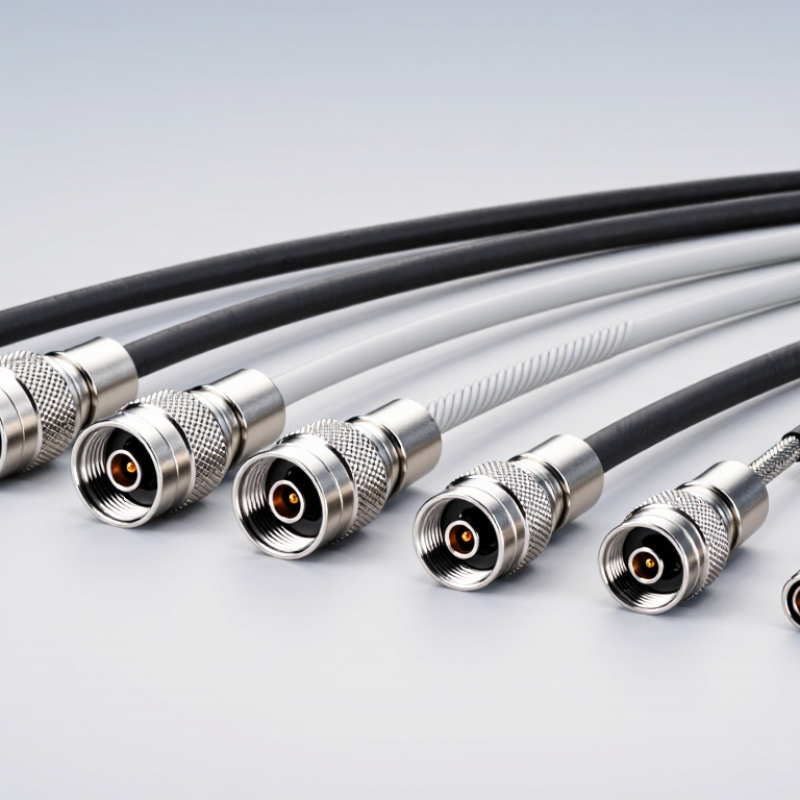
Top 10 TNC Cable Assembly Manufacturers for Global Buyers

TNC Cable Assemblies: Design, Components, and Common Applications

TNC cable assemblies combine a threaded coaxial connector with a cable selected for the signal and installation environment. The threaded coupling helps resist loosening when equipment experiences vibration. A typical assembly includes a center contact, dielectric insulator, outer conductor, connector body, and protective finish. The cable may use a solid or stranded center conductor, depending on flexibility and performance needs.

Small details matter. Connector and cable impedances should match the system, commonly 50 ohms in radio-frequency applications. Assembly quality also depends on correct cable preparation, consistent crimping or soldering, and careful shielding termination. A poorly seated braid can increase signal leakage or cause inconsistent readings. Visual inspection helps, but it cannot reveal every internal defect; electrical testing is still important.

TNC assemblies appear in test instruments, antennas, wireless infrastructure, navigation equipment, and outdoor monitoring systems. Their threaded connection can suit installations where cables are handled or exposed to movement. For a fixed indoor instrument, flexibility and bend radius may matter more than ruggedness. For an outdoor antenna run, moisture resistance and connector sealing deserve closer review. The trade-off is not always obvious. A thicker cable may reduce signal loss, yet it can be awkward in a tight enclosure. Buyers should confirm frequency range, cable length, operating conditions, and test requirements before specifying an assembly.
How to Evaluate TNC Cable Assembly Manufacturers

How to Evaluate TNC Cable Assembly Manufacturers

The global coaxial cable market was valued at about USD 13.6 billion in 2023, with Grand View Research forecasting 6.6% annual growth through 2030. This growth signals broad demand, not proof of supplier quality. For TNC assemblies, ask for test results tied to the exact cable length, connector, and operating frequency. Check impedance, insertion loss, VSWR, and shielding performance. TNC connectors use threaded coupling, but their rated frequency depends on the assembly design.

Request inspection records and traceability for conductors, dielectric materials, and connector parts. Ask how the supplier controls crimp dimensions and torque; small variations can affect repeatability. IEC 61169-17 describes requirements for TNC connectors, while IPC/WHMA-A-620 provides workmanship criteria for cable and wire harness assemblies. Confirm which revisions and acceptance classes apply. A certificate alone is not enough. Review sample measurements and lot-level test records.

Tips: Send the same drawing and test limits to every candidate. Compare measured results, not just catalog claims. Ask for a first-article sample and inspect the connector interface, braid coverage, and strain relief. If a supplier cannot explain a failed measurement clearly, pause. I would also check how it handles design changes; that detail is easy to overlook.

Top 10 TNC Cable Assembly Manufacturers for Global Buyers - How to Evaluate TNC Cable Assembly Manufacturers

Use these ten evidence-based checkpoints to compare manufacturers. The table lists evaluation criteria and recognized technical references, not company rankings or manufacturer-specific claims.

No. Evaluation Dimension What Buyers Should Verify Useful Evidence to Request Relevant Standard or Basis
1 TNC Interface and Impedance Confirm the connector interface, gender, polarity, and nominal impedance match the equipment and system design. Do not assume every TNC assembly has the same impedance or configuration. Connector drawings, interface specifications, part-level datasheets, and a written confirmation of the required mating interface. IEC 61169-17 covers the TNC RF coaxial connector series.
2 RF Performance Review operating frequency, insertion loss, return loss or VSWR, and any power-handling limits for the complete cable assembly at the intended frequencies. Frequency-specific test results or datasheets that identify the cable type, connector configuration, assembly length, and test method. Compare results with the project specification; performance depends on the connector, cable, length, and assembly workmanship.
3 Cable Construction Check cable type, nominal impedance, conductor and dielectric construction, shielding, jacket material, bend radius, and length tolerance. Cable manufacturer datasheet, assembly drawing, material declaration, and a sample inspection against the approved specification. Use the selected cable’s published datasheet and the buyer’s application requirements as the acceptance basis.
4 Assembly and Termination Quality Assess connector attachment, crimp or solder process control, strain relief, cable preparation, and workmanship consistency. Process instructions, workmanship criteria, inspection records, and representative samples from production. Acceptance criteria should be agreed in the drawing or purchase specification before production.
5 Electrical and Mechanical Testing Determine which checks are performed on each assembly and which are performed by sampling, including continuity, shorts, and applicable RF or mechanical tests. Test plan, equipment calibration records, sample test reports, and clearly stated pass/fail limits. MIL-STD-202 contains test methods for electronic and electrical component testing; applicable methods should be specified by the buyer.
6 Environmental Suitability Match the assembly to its operating environment, including temperature, moisture, vibration, chemicals, UV exposure, and required ingress protection. Ratings and test reports for the complete assembly where applicable; confirm that any IP claim applies to the assembled connection and installation conditions. IEC 60529 defines IP code classifications for degrees of protection provided by enclosures.
7 Quality Management Check whether the manufacturer operates a documented quality management system and whether its scope covers the relevant manufacturing site and activities. Current certificate, issuing body details, site and scope information, and a description of corrective-action and nonconformance processes. ISO 9001 specifies requirements for quality management systems; certification alone does not certify a particular product’s performance.
8 Materials and Regulatory Documentation Identify material and market-access documentation required for the destination and end use. Confirm the exact assembly and materials covered by each declaration. Applicable declarations, material data, and supporting documentation tied to the quoted part number or bill of materials. EU RoHS Directive 2011/65/EU and REACH Regulation (EC) No 1907/2006 apply according to their scope and requirements.
9 Traceability and Change Control Establish how finished assemblies, components, and production lots are identified, and how material or process changes are communicated. Sample labels, lot records, retention policy, change-notification procedure, and a method for linking test results to production lots. Define traceability level and prior-change approval requirements in the purchase specification or quality agreement.
10 Customization and Supply Readiness Assess the ability to build to a controlled drawing, support prototypes and production volumes, manage lead times, and package assemblies to prevent damage. Written quotation, drawing review, prototype plan, production lead-time commitment, packaging specification, and capacity or continuity plan. Compare offers using the same revision-controlled requirements, forecast, order quantity, and delivery terms.

Global Supply and Quality Factors for TNC Cable Assemblies

For global buyers, TNC cable assembly quality starts with matching the connection to the actual system. Confirm impedance, operating frequency, cable length, and expected signal conditions before comparing quotations. A connector may look correct but still fit poorly or perform inconsistently when its interface dimensions are off. Small mismatches matter. Fit matters.

Ask suppliers how they verify continuity, insertion loss, shielding, and connector retention. Request test records tied to the shipment, not just a general quality statement. Sample inspection can reveal loose coupling nuts, uneven crimping, or damaged cable jackets. These details are easy to overlook in a crowded specification sheet. Visual checks alone, however, cannot confirm electrical performance.

Global supply reliability depends on more than factory capacity. Confirm standard lead times, minimum order quantities, component availability, and how schedule changes are communicated. For recurring orders, ask whether the supplier can keep specifications and inspection records consistent across production batches. Protective caps and dry, organized packaging help prevent thread damage during long-distance handling. A low quote can be attractive, but it may leave unclear assumptions about testing or packaging. Even a careful checklist can miss a detail; buyers should review the first production sample against the intended installation before approving larger orders.

TNC Interface Frequency Capability: Typical Reference Values

Conventional TNC interfaces are commonly rated up to 11 GHz, while selected high-frequency designs may be rated up to 18 GHz. These are interface reference values, not guaranteed ratings for every cable assembly; the complete assembly’s performance depends on its connectors, cable, and test conditions. Confirm specifications and test reports when comparing suppliers.

Top 10 TNC Cable Assembly Manufacturers for Global Buyers

Global buyers comparing TNC cable assembly manufacturers should begin with the application, not a catalog photo. TNC connectors use a threaded coupling that can help maintain a secure connection in vibrating equipment. Confirm impedance, frequency range, connector gender, cable type, and finished length before requesting a quote. Small mismatch, costly delay.

Ask how assemblies are inspected and tested. Useful records may include continuity results, insertion loss, and voltage standing wave ratio measurements across the specified frequency range. Check whether the supplier can provide material traceability and consistent inspection criteria for repeat orders. Fit matters. A sample can reveal practical issues that a drawing misses, such as a connector body that blocks access or a cable that bends too sharply near its termination.

For international sourcing, compare lead times, minimum order quantities, packaging, and communication practices alongside price. Request a first-article sample when dimensions or routing are critical, then verify it against the approved drawing. Be precise about revisions; details drift when a cable length changes in an email but not on the purchase specification. No checklist catches everything, so record test limits and acceptance criteria before production begins. A clear specification makes supplier comparisons more useful and reduces avoidable rework.

Comparing Manufacturers by Product Range, Certification, and Support

For global buyers, a TNC cable assembly manufacturer should be judged by more than connector availability. Compare options for cable impedance, jacket material, length, and termination style. Ask whether the supplier provides measured insertion loss, VSWR, and shielding data at your operating frequencies. TNC performance varies with the cable and assembly, not just the connector. The IEC 61169-17 specification defines key interface requirements for 50-ohm TNC connectors.

Certification scope matters. ISO 9001 supports quality-system consistency, while aerospace or automotive projects may require sector-specific approvals. Confirm that certificates cover the actual manufacturing site and process. Also check whether each production lot has traceable inspection records.

IDC’s Data Age 2025 report forecast global data creation would reach 175 zettabytes in 2025. That forecast is not a TNC market measure, but it highlights the expanding demands on data infrastructure and its signal connections.

Support can separate capable suppliers from catalog-only sellers. Ask for engineering review of drawings, sample lead times, and a clear process for handling failures. A useful supplier will explain test limits and recommend suitable cable options, rather than promise performance without conditions.

The comparison is rarely perfectly tidy: manufacturers may report test results using different frequencies, fixtures, or cable lengths. Request comparable evidence before ranking them.

No datasheet tells the whole story.

Tell us about your project

Our Off-grid experts will come back with recommendations

x
Can we help?
Leading Edge
Off-Grid Power Requirements
Leading Edge
Sign Up To Receive Our Newsletter

Stay up to date with Leading Edge innovations and offers by joining our mailing list. Occassionally we send informative newsletters, offers and promotions that we think you'll find useful or interesting.