

A Palletizing Machine can help a business move finished products from a packing line onto pallets with greater consistency. Instead of relying entirely on repeated manual lifting and stacking, a system can place cartons in planned patterns at a steady pace. Picture cases arriving on a conveyor, being grouped by layer, and forming a stable load ready for wrapping. The change can reduce repetitive handling and free workers for tasks that require judgment. It is not an instant fix.
The right equipment depends on what the line actually handles. Case size, package weight, hourly output, available floor space, and pallet patterns all affect the choice. A system designed for uniform boxes may struggle when products vary, so real production samples matter during evaluation. Businesses should also consider changeover time, operator training, maintenance access, and how the machine will connect with existing conveyors. Small details matter.
When assessing a Palletizing Machine, compare expected throughput with measured line demand, not an optimistic peak figure. Ask suppliers how performance was tested and what routine service involves. A visit to a working installation can reveal practical issues that a specification sheet misses, such as awkward access or noisy transfers. Automation may improve consistency, but it still needs good setup and ongoing attention. That part is easy to underestimate. A careful assessment helps businesses choose equipment that fits daily operations, rather than buying capacity they rarely use.
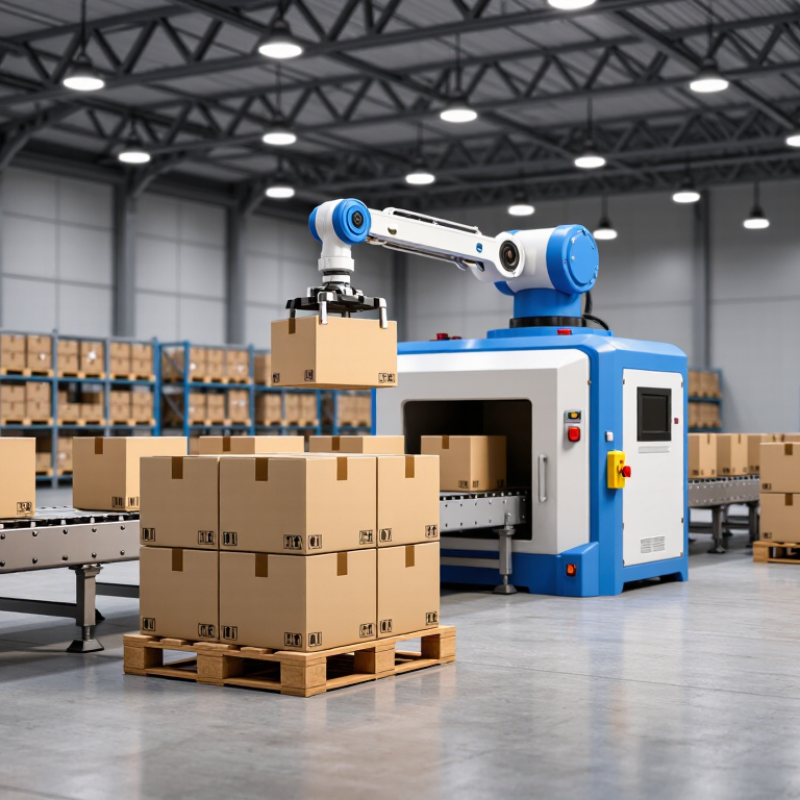
A palletizing machine is equipment that arranges cartons, bags, or other suitable packages into stable layers on a pallet. It may use a robotic arm, a layer-forming system, or a combination of conveyors and lifting equipment. The exact setup depends on package size, weight, production speed, and available floor space. A machine does not simply stack items at random. It follows a programmed pattern designed to keep the load balanced and easier to handle.
Packages travel along a conveyor, where sensors or guides help position them. The system groups them into a layer, then transfers that layer onto the pallet. With a robotic model, a gripper may pick up one package or several at once.
Then the lift begins. The machine repeats the cycle, adjusting the pallet height or the tool position as the stack grows. Small details matter. Cartons with soft sides, uneven weights, or slippery surfaces may shift, so operators need to test the pattern with real products.
In practice, packages rarely behave like perfect blocks. A tidy diagram cannot reveal every jam or misaligned case. Regular checks of sensors, grippers, and pallet placement help keep the process consistent.
Palletizing machines generally fall into conventional layer systems, robotic cells, and collaborative systems. Conventional palletizers arrange full layers of cases before placing them on a pallet. They suit steady production, uniform cartons, and predictable patterns; a high-level model feeds pallets at an elevated station, while a low-level model keeps loading closer to floor height. Robotic palletizers use an articulated arm and a configurable gripper to pick cases individually or in rows. They can handle changing pallet patterns, but gripper setup and guarding need careful attention. The International Federation of Robotics reported 541,302 industrial robot installations worldwide in 2023 in its World Robotics 2024 report. That figure covers industrial robots broadly, not palletizing machines specifically, but it shows the scale of industrial automation.
Collaborative palletizing systems are designed to work near people under defined safety conditions. They can suit smaller lines, where an operator may swap a pallet or replenish cartons nearby. Some systems are easier to relocate than fixed layer machines. Still, “collaborative” does not mean risk-free: a heavy case or awkward reach can change the safety assessment. Semi-automatic options offer another fit. An operator builds or positions the load while powered equipment handles lifting or wrapping. Watch the actual workflow. A line processing mixed carton sizes may need more pattern flexibility than a high-speed line stacking identical boxes. A site trial can reveal awkward handoffs that a specification sheet misses.
A palletizing machine improves operations by making the end of a packaging line more predictable. It lifts cartons, arranges them in repeatable layers, and builds loads to a programmed pattern. That matters. Operators spend less time repeating heavy lifts, while supervisors can plan staffing around steadier case flow. The payoff is not automatic: crushed boxes, mixed-SKU orders, and uneven carton sizes can still disrupt a pallet.
The International Federation of Robotics’ World Robotics 2024 report recorded 541,302 industrial robot installations worldwide in 2023. This figure covers many industrial uses, not palletizing alone, but it shows the scale of factory automation. In a warehouse, automated stacking can help maintain a consistent pallet footprint and reduce manual handling. Forklift drivers may also receive more uniform loads, which can make staging and transport easier.
Measure cases per minute, stoppages, pallet stability, and labor hours per pallet before and after installation. Test the machine with real cartons, including soft packaging and mixed orders. Watch the infeed closely. A faster palletizer may simply move a bottleneck upstream if conveyors cannot supply cases evenly. Results also depend on maintenance, operator training, and how often product patterns change. The numbers can disappoint at first; that is useful evidence for adjusting the setup.
Illustrative palletizing capacity over an 8-hour shift
This example calculates capacity using assumed rates of 5 pallets per hour for manual palletizing and 20 for automated palletizing, with 8 operating hours and no downtime. Actual throughput depends on the product, equipment, layout, and operating conditions. Automation can increase throughput and reduce repetitive manual handling.
Why Choose a Palletizing Machine for Your Business?
Factors to Consider When Choosing a Palletizing Machine
Choosing a palletizing machine starts with the load, not the headline speed. Record case dimensions, weight, stacking pattern, and hourly demand across normal and peak shifts. A line producing 18 cases per minute may need a different system from one handling mixed cartons. Small details matter. Measure the tallest pallet, too.
Check how the machine will fit existing conveyors, pallet dispensers, stretch wrappers, and forklift routes. A compact robotic cell can save floor space, but its reach and safety guarding still need careful review. Conventional layer palletizers may suit stable, uniform cases; robots can offer more pattern flexibility. Neither choice is automatically better. Ask for a test using actual cartons, including soft or slightly damaged ones.
Compare more than the purchase price. Include installation, energy use, changeover time, spare parts, operator training, and access for maintenance. Ask for documented cycle-rate assumptions and clear recovery procedures after a fault. Confirm who will support the controls and routine servicing. A plan can look excellent on paper, then stumble over awkward pallet changes. That risk is easy to underestimate.
| Factor | What to Assess | Useful Planning Data | Why It Matters |
|---|---|---|---|
| Required throughput | Cases or products to be palletized per minute, including peak production periods. | Record average and peak line rates; compare them with the machine’s rated rate under your actual product and stacking conditions. | A machine sized only for average output may become a bottleneck during peak production. |
| Product and case range | Case dimensions, weight, packaging material, and the number of product formats handled. | Document the minimum and maximum case length, width, height, and weight, plus any unusual or unstable packaging. | Product variation affects gripping, layer formation, changeover time, and stacking stability. |
| Pallet specifications | Pallet length, width, height, condition, and the required load pattern. | Confirm the pallet standard used at the site and define the target pallet height and maximum load weight. | Accurate pallet and load details help ensure the finished pallet fits storage, transport, and handling equipment. |
| Stacking pattern and stability | Case orientation, layer arrangement, interlocking pattern, and whether slip sheets are required. | Test the intended pattern with real products and assess load stability during conveying and transport. | A suitable pattern can reduce shifting, damaged goods, and inconsistent pallet loads. |
| Available floor space | Machine footprint, infeed and outfeed conveyors, pallet staging, and operator access. | Measure the installation area, ceiling clearance, access routes, and space needed for maintenance and pallet exchange. | The full cell requires more space than the palletizing unit alone. |
| Flexibility and changeovers | How often product sizes, pallet patterns, and production schedules change. | List each regular product format and estimate changeover frequency and acceptable changeover time. | Frequent format changes may make recipe-based controls and adaptable tooling especially valuable. |
| Automation and integration | Compatibility with upstream packaging equipment, conveyors, pallet dispensers, and warehouse systems. | Define required communication signals, line controls, pallet flow, and fault-handling procedures before installation. | Good integration helps prevent line stoppages and supports reliable operation across the production process. |
| Worker safety | Access points, moving machinery, pallet handling, and safeguarding requirements. | Review the cell layout and risk assessment against applicable local safety regulations and site procedures. | Appropriate guarding, safe access, and clear operating procedures help protect workers and support compliance. |
| Labor and operating costs | Current palletizing labor, shift patterns, energy use, consumables, and maintenance needs. | Compare total operating costs over the expected service life, not just the purchase price. | A lifecycle-cost view gives a more realistic basis for evaluating productivity gains and payback. |
| Maintenance and support | Routine service requirements, spare-parts availability, training, and technical support response. | Ask for a maintenance schedule, operator training plan, and details of service coverage for the installation location. | Accessible support and planned maintenance can reduce unexpected downtime. |
Note: Planning requirements vary by product, production line, pallet pattern, and site conditions. Confirm performance and layout requirements through a detailed application review and product testing.
A palletizing machine works best when it fits the whole production line, not just the end of it. Map product flow from the final conveyor to the wrapping area. Check carton dimensions, weight, stacking patterns, and the space workers need around the cell. Small details matter. A conveyor that feeds cartons unevenly can interrupt an otherwise capable system.
Automation is expanding across manufacturing. The International Federation of Robotics reported 541,302 industrial robots installed worldwide in 2023, with the global operational stock reaching 4.28 million units in its World Robotics 2024 report. These figures describe industrial robots broadly, not palletizers alone, but they show the scale of investment in automated production. For a business, the practical question is whether a machine can match actual line speed and product variation.
Plan integration around real operating conditions. Test common and awkward carton sizes, confirm pallet changeover procedures, and define how operators will respond to jams. Not quite plug-and-play. Controls and guarding need coordination with existing equipment, and a rushed layout can create new bottlenecks. A pilot using representative products can reveal issues before installation. Review downtime, changeover time, and pallet quality after launch; early assumptions may need adjustment.
Our Off-grid experts will come back with recommendations

Stay up to date with Leading Edge innovations and offers by joining our mailing list. Occassionally we send informative newsletters, offers and promotions that we think you'll find useful or interesting.