

Blog

2026 Top DIY Wind Turbine Types for Global Buyers?

The 2026 DIY Wind Turbine market is becoming more practical, but not automatically easier. GWEC’s Global Wind Report 2025 recorded about 117 GW of new wind capacity in 2024. Global installed wind capacity reached approximately 1.1 TW. IRENA’s Renewable Capacity Statistics 2025 reports a similar figure, although its methodology differs slightly. These numbers describe utility-scale growth, not backyard systems. That distinction matters.

A global buyer must match turbine type with local wind conditions, tower height, maintenance skills, and grid rules. Horizontal-axis turbines usually deliver stronger output in open, steady wind. Vertical-axis designs can suit turbulent sites, but their energy yield is often lower. Axial-flux alternators offer flexible DIY construction and easier repair access. Tilt-up towers remain attractive where safe maintenance matters. Hugh Piggott, a respected small-wind engineer and author, writes, “A wind turbine is a simple machine, but it is not easy to build one.” That warning still feels accurate.

A good design starts with measurement. Use an anemometer, not a guess. Check turbulence near trees, rooftops, and ridgelines. Include furling, braking, grounding, and battery protection from the beginning. Small details prevent expensive failures. However, this overview is not flawless. Wind maps can overstate household-level performance, while advertised power ratings often assume ideal wind speeds. Buyers should compare measured annual energy, not only peak watts. The following outline examines the leading 2026 DIY Wind Turbine types, their real advantages, limitations, and suitability for different climates.
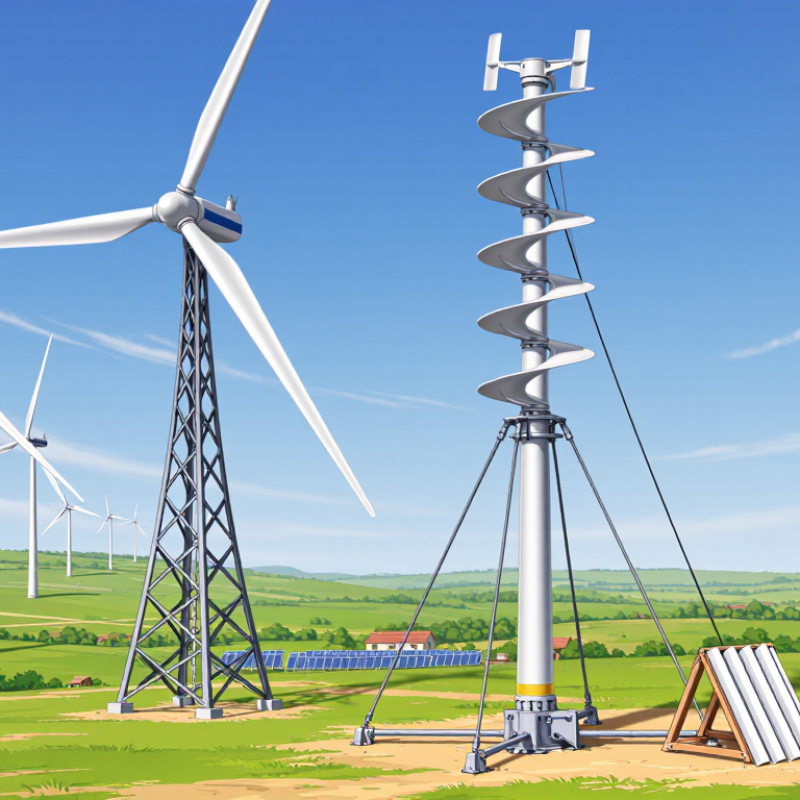
2026 Top DIY Wind Turbine Types for Global Buyers?

What Is a DIY Wind Turbine and How Does It Work?

What Is a DIY Wind Turbine and How Does It Work?

A DIY wind turbine is a small energy system assembled from accessible mechanical and electrical parts. Most designs use horizontal-axis blades, while vertical-axis models suit turbulent urban sites better. They are not automatically easier to build.

Wind pushes the blades and turns a rotor. The rotor drives a shaft connected to a generator. The generator produces variable-frequency electricity. A rectifier converts it to direct current, while a charge controller manages battery charging. An inverter can then supply household alternating current. Some systems feed a permitted electrical network connection, but that requires qualified inspection.

Output depends heavily on wind speed. Power rises roughly with the cube of wind speed, so a modest increase can matter greatly. The U.S. Department of Energy identifies swept area, tower height, and local turbulence as key design factors. Measure wind conditions before cutting materials.

The global scale is substantial. IRENA’s Renewable Capacity Statistics 2025 recorded about 1,133 GW of installed wind capacity worldwide by the end of 2024. The Global Wind Energy Council reported approximately 117 GW of new wind capacity added during 2024. DIY units remain tiny beside this industry. That comparison can mislead.

A rooftop turbine may face vibration, noise, and weak airflow. A taller tower often performs better. I would not trust a promising phone reading alone; seasonal measurements are wiser. One imperfect blade can reduce balance, efficiency, and safety.

Which DIY Wind Turbine Types Suit Different Global Locations?

Choosing a DIY wind turbine begins with geography, not appearance. The 2024 Global Wind Report recorded 117 GW of new wind capacity worldwide, but utility-scale results do not guarantee success at home. Small turbines need steady airflow, safe tower placement, and realistic energy estimates.

Open plains and coastal fields usually suit horizontal-axis turbines. Their blades face the wind and perform well above nearby trees, buildings, and ridges. A 10-meter tower can still face turbulence from a small house. Poor siting remains a common DIY mistake. The Global Wind Atlas recommends checking local wind resources rather than trusting regional averages.

Vertical-axis turbines may suit compact sites with changing wind directions, such as dense urban edges or mountain villages. Savonius designs start easily at low speeds, but their energy output is modest. Darrieus designs can be more efficient, yet they often need stronger starting systems and careful balancing. Rooftop mounting deserves caution. Turbulence, vibration, and structural loading can reduce output and shorten service life.

Cold regions require icing protection and flexible maintenance plans. Coastal locations need corrosion-resistant fasteners and sealed electrical components. Areas exposed to cyclones need emergency shutdown systems and stronger foundations. The IEC 61400-2 standard provides useful safety guidance for small wind turbines, although a homemade machine may not fully meet it. I would not treat this as a minor detail. Local electrical rules, tower permits, and professional structural checks still matter, especially when wind speeds exceed expectations.

2026 Top DIY Wind Turbine Types for Global Buyers

The chart compares representative annual mean wind speeds commonly used for early-stage site screening with practical DIY turbine choices. Horizontal-axis wind turbines generally perform best in open, steady winds, while vertical-axis turbines can be considered where wind direction changes frequently or turbulence is present. Actual output depends on hub height, rotor diameter, air density, turbulence, local regulations, and measured wind data.

How to Compare DIY Wind Turbine Designs, Materials, and Costs?

Comparing a DIY wind turbine starts with the site, not the shopping list. Horizontal-axis designs usually produce more power in steady, unobstructed wind. Vertical-axis designs accept changing wind directions, but turbulent yards can reduce their efficiency. Measure wind speed at hub height for several months, if possible. A rooftop test can mislead. Nearby walls create vibration, noise, and uneven airflow.

Material choices affect safety, lifespan, and maintenance. Fiberglass blades are light and weather-resistant, while carefully sealed wood can reduce initial costs. Wood still needs regular inspection for cracks and moisture damage. Aluminum towers resist corrosion but may require stronger joints. Steel is often cheaper, yet its weight increases transport and foundation costs. Never judge a turbine by blade price alone. Include the tower, bearings, charge controller, wiring, batteries, tools, and replacement parts. A low-cost build can become expensive after one failed bearing or poorly balanced blade.

A reliable comparison uses annual energy output, not maximum wattage. Ask how the design performs at low wind speeds, where many home sites remain. Check rated voltage, overspeed protection, braking, and tower stability. Keep written measurements and photograph each connection during assembly. I would leave extra budget for mistakes; first calculations are rarely perfect. Local planning rules and electrical requirements also matter, especially for batteries or grid connections. A turbine that works on paper may still be unsuitable beside a bedroom, road, or neighboring property.

2026 Top DIY Wind Turbine Types for Global Buyers? - How to Compare DIY Wind Turbine Designs, Materials, and Costs?

Indicative planning ranges for small off-grid or supplemental-power projects. Actual output and cost depend on wind resource, tower height, component quality, installation conditions, and local regulations.
DIY Turbine Design Typical Rated Power Range Recommended Wind Conditions Rotor and Generator Configuration Common DIY Materials Indicative Capacity Factor Typical Complete DIY System Cost Advantages Limitations Best-Fit Application Overall DIY Suitability
Three-Blade Horizontal-Axis Wind Turbine 400 W–5 kW Average annual wind speed of approximately 5–8 m/s at hub height; performs best in open, unobstructed locations Upwind rotor with three blades, tail or yaw system, permanent-magnet alternator, rectifier, charge controller, and inverter Fiberglass or laminated wood blades, steel or aluminum hub, steel frame, copper-wound generator, galvanized steel tower 15%–30% US$1,500–US$12,000, excluding major civil works Strong energy performance, mature aerodynamic design, good efficiency at suitable sites, widely available technical information Requires a tall tower and careful balancing; produces vibration and noise if poorly aligned; needs yaw and overspeed protection Rural homes, farms, remote cabins, battery charging, and hybrid solar-wind systems High
Small Two-Blade Horizontal-Axis Turbine 300 W–3 kW Average annual wind speed of approximately 5–8 m/s; requires a clear airflow path Two-blade rotor, tail or passive yaw system, permanent-magnet alternator, rectifier, controller, and inverter Fiberglass, carbon-reinforced wood, or laminated timber blades; steel hub and tubular tower 12%–25% US$1,200–US$8,000, excluding major civil works Lower blade material use, lighter rotor, easier manual fabrication, and potentially lower starting torque losses More noticeable cyclic loading and vibration; greater balancing sensitivity; generally less smooth operation than a three-blade rotor Experimental projects, educational builds, and small battery-charging systems Medium
H-Rotor Darrieus Vertical-Axis Turbine 300 W–5 kW Average annual wind speed of approximately 4.5–7 m/s; suitable where wind direction changes frequently Vertical shaft with straight airfoil blades, central generator, and fixed azimuth orientation Aluminum or fiberglass blades, steel struts, tubular steel shaft, sealed bearings, and permanent-magnet generator 10%–25% US$1,500–US$10,000, depending on tower and generator size No yaw mechanism, compact footprint, accepts wind from multiple directions, and can place the generator near ground level May have poor self-starting behavior; blade fatigue and bearing loads require careful design; lower energy yield at many sites than a comparable horizontal-axis machine Urban-edge sites, turbulent locations, demonstration systems, and installations where yawing is impractical Medium
Helical Darrieus Vertical-Axis Turbine 300 W–3 kW Average annual wind speed of approximately 4.5–7 m/s; performs better than straight-blade designs in variable wind direction Twisted airfoil blades arranged around a vertical shaft with a ground-level generator Fiberglass or aluminum helical blades, steel shaft, welded frame, sealed bearings, and permanent-magnet alternator 10%–22% US$2,000–US$11,000 Smoother torque, reduced pulsating loads, no yaw system, and visually compact form Twisted blades are difficult to fabricate accurately; supports and bearings can be heavily loaded; maintenance access may be limited Architectural projects, educational installations, and sites with changing wind direction Medium
Savonius Vertical-Axis Turbine 50 W–1 kW Average annual wind speed of approximately 3.5–6 m/s; can operate in turbulent or lower-speed airflow Two or more overlapping scoops or half-cylinder buckets mounted on a vertical shaft Recycled plastic or metal drums, aluminum sheets, plywood prototypes, steel shaft, bearings, and low-speed generator 5%–15% US$250–US$3,000 High starting torque, simple construction, accepts wind from any direction, and suitable for basic mechanical or low-power electrical loads Low aerodynamic efficiency, large swept area for the power produced, and generally unsuitable for significant household electricity generation Ventilation fans, sensors, garden lighting, educational models, and small battery systems High for prototypes; Low for household power
Hybrid Savonius–Darrieus Vertical-Axis Turbine 300 W–3 kW Average annual wind speed of approximately 4–7 m/s; useful where self-starting and changing wind direction are concerns Low-speed Savonius starter rotor combined with higher-speed Darrieus lift blades on one shaft Steel or aluminum frame, fiberglass or aluminum airfoils, sheet-metal scoops, steel shaft, and permanent-magnet generator 8%–20% US$1,500–US$9,000 Improved self-starting compared with many pure Darrieus designs, no yaw mechanism, and flexible operation in variable airflow More components and drag than a pure Darrieus rotor; complex structural loading; usually lower peak efficiency than a well-sited horizontal-axis turbine Small off-grid systems, variable-wind locations, and engineering demonstration projects Medium
Water-Pumping Mechanical Windmill Mechanical output equivalent to approximately 500 W–5 kW Average annual wind speed of approximately 4–7 m/s; requires sufficient wind consistency and a suitable water source Multi-blade or low-speed horizontal rotor connected through a mechanical crank, gearbox, or reciprocating pump Galvanized steel blades, steel hub, wooden or steel tower, mechanical linkage, and corrosion-resistant pump components 10%–25% as a wind-to-useful-output planning range US$1,500–US$10,000, excluding well drilling and water-storage infrastructure Can deliver useful mechanical work without batteries or an inverter; robust designs can operate for many years with regular maintenance Does not directly provide household electricity; moving mechanical parts require lubrication and periodic replacement Livestock watering, irrigation storage tanks, and remote agricultural sites High for water pumping

Cost ranges are indicative 2026 planning estimates in US dollars for small DIY-scale systems and may exclude shipping, import duties, batteries, inverters, foundations, professional electrical work, permits, and tower erection. A practical site assessment should use measured wind data at the proposed hub height; wind power increases approximately with the cube of wind speed, so a small difference in average wind speed can significantly change annual energy production.

What Safety, Legal, and Grid Rules Affect DIY Wind Turbines?

DIY wind turbines can look simple on paper, but safety rules begin before the first blade turns. Check local planning laws, height limits, setback distances, and noise requirements. Some areas protect nearby homes, roads, airports, and wildlife habitats. A turbine beside a bedroom window may create vibration, even when its measured sound level seems acceptable.

Use a qualified structural engineer to review the tower, foundation, guy wires, and storm loads. Soil conditions matter. So does access for emergency maintenance. Install a grounding system, lightning protection, an emergency brake, and a clear shutdown switch. Blades should remain unreachable from public paths. Never inspect moving parts during strong winds. A small turbine is not automatically low-risk.

Grid connection rules are equally important for global buyers. Ask the local utility whether approval, inspection, certified equipment, or a two-way meter is required. Grid-tied systems usually need anti-islanding protection, correct voltage control, and an approved disconnect. Off-grid batteries still require ventilation, overcurrent protection, and safe cable routing. Local electrical codes can differ sharply between countries and even cities. That part is easy to underestimate. Keep permits, test records, wiring diagrams, and maintenance logs. I would also budget for a professional inspection, even after a careful DIY build. Some designs work well in theory but fail after months of vibration, corrosion, or changing wind conditions.

How to Choose the Best DIY Wind Turbine for Your Energy Goals?

2026 Top DIY Wind Turbine Types for Global Buyers

Choosing a DIY wind turbine starts with your energy goal, not the advertised wattage. A cabin may need battery charging, while a workshop may need steadier power. The site matters more than the label.

The International Energy Agency reported nearly 510 GW of new renewable capacity in 2023. Wind and solar supplied about 95% of that growth. However, utility-scale figures do not guarantee good home performance. The U.S. Department of Energy’s Distributed Wind Market Report stresses that wind speed, tower height, turbulence, and maintenance access shape project results.

Measure carefully.

For low-wind urban sites, a vertical-axis turbine may offer simpler orientation and quieter operation, but its energy yield can be modest. A horizontal-axis turbine usually performs better in open, steady wind. It needs a stronger tower, clear setbacks, and regular inspection. Hybrid systems can suit remote users who already rely on solar power, especially during windy nights or cloudy seasons.

Use a local wind assessment before buying. A short mast reading is useful, but one month can mislead. I have seen small turbines spin impressively while producing little usable energy. That is the uncomfortable part. Check the turbine’s power curve, rated wind speed, battery voltage, controller compatibility, and replacement-parts availability. Avoid choosing by peak watts alone. A durable 400-watt system may outperform a poorly matched 1,000-watt model over a full year. Safety, grounding, structural review, and local electrical requirements must guide every installation.

Tell us about your project

Our Off-grid experts will come back with recommendations

x
Can we help?
Leading Edge
Off-Grid Power Requirements
Leading Edge
Sign Up To Receive Our Newsletter

Stay up to date with Leading Edge innovations and offers by joining our mailing list. Occassionally we send informative newsletters, offers and promotions that we think you'll find useful or interesting.