

Blog

Which China Top Wind Turbine Generator for Home Is Best?

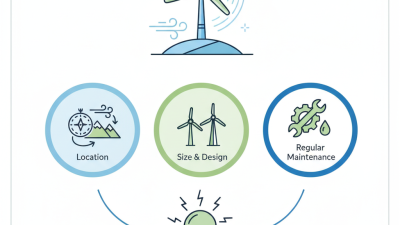
Choosing which China top Wind Turbine Generator for Home is best starts with the wind at your property, not the biggest number on a product page. A rooftop in a dense neighborhood faces different conditions from an open rural site. Nearby trees, turbulence, tower height, noise, and safe electrical integration all affect real-world performance. Small details matter.

Small-wind expert and author Paul Gipe has long emphasized careful site assessment. A fair paraphrase of his practical guidance is: “A turbine cannot make up for a poor wind site.” That point deserves attention. A polished brochure may promise impressive output, but rated power alone does not show how much electricity a turbine can produce in your local wind. Check the power curve, rotor diameter, cut-in wind speed, controller, inverter compatibility, warranty, and access to replacement parts. Ask for clear test information, not just marketing claims.

This guide compares Chinese home wind turbines through those practical measures. It also considers installation needs, maintenance, sound, and the manufacturer’s support after purchase. No single model suits every home. That is easy to forget. Even a well-reviewed turbine may disappoint when mounted too low or placed behind obstacles. The aim is not to crown the loudest seller. It is to help you identify a suitable system, understand its limits, and ask better questions before spending money. Some details may remain uncertain until a qualified installer assesses your site. That is not a flaw in the comparison; it is part of an honest decision.

Which China Top Wind Turbine Generator for Home Is Best?

China’s 2024 Wind Capacity Reached 520 GW: What It Means for Home Buyers

China’s wind power capacity reached 520 gigawatts by the end of 2024, according to the National Energy Administration’s annual industry statistics. The administration reported an 18% year-on-year increase. The Global Wind Energy Council’s Global Wind Report 2025 estimates that China added about 79.8 GW in 2024, driving much of the world’s new wind capacity. This is a huge industrial signal. It points to expanding supply chains and growing technical experience. Yet it does not prove a home turbine will pay off.

For households, local wind matters more than national totals.

The U.S. Department of Energy’s Distributed Wind Market Report highlights the importance of wind resources, turbine height, and site conditions. A sheltered roof surrounded by trees may have turbulent airflow and weak output, even when regional wind farms thrive. That distinction is easy to miss. Before buying, check wind speeds at the intended hub height, not just a weather app.

Request an annual energy estimate based on local data, and ask about noise, maintenance, tower foundations, and grid connection costs. A small turbine may suit an exposed rural property but disappoint in a dense neighborhood.

Be skeptical of guaranteed output claims. The honest answer is site-specific, even if that feels less satisfying than naming one “best” turbine.

IEC 61400-2 Covers Small Turbines with Rotor Areas up to 200 m²

For a home turbine, IEC 61400-2 is a useful safety and design benchmark, not a performance guarantee. It covers small wind turbines with rotor swept areas up to 200 m². For a circular rotor, that limit corresponds to a diameter of about 16 metres. The standard addresses structural loads, engineering integrity, and safety—important when gusts push blades and tower sections repeatedly.

Area matters. A larger rotor may capture more wind, but it also faces higher loads and needs suitable site conditions.

DOE and NREL’s Distributed Wind Market Report reported roughly 1.1 GW of U.S. distributed-wind capacity through 2022. That figure includes varied turbine sizes and applications; it is not evidence that a residential turbine will produce a particular amount of power. Check the manufacturer’s IEC 61400-2 documentation, then compare rated output with local wind measurements, tower height, and nearby obstructions. A standards label cannot make a sheltered, turbulent yard productive.

And this is easy to overlook.

Tips: Ask for the declared rotor area, design wind class, and test documentation. Verify local average wind speed at the proposed hub height. A rooftop location may seem convenient, but turbulence can reduce output and increase vibration.

Assess Hub-Height Wind Speeds Before Choosing a Rated Generator Capacity

For a home wind turbine, rated capacity is a poor starting point.

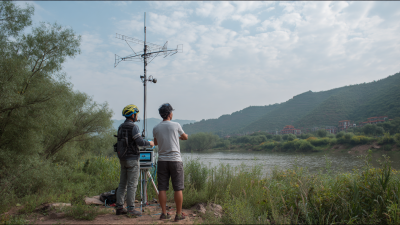
Measure or model the wind at the intended hub height, not at rooftop level. The U.S. Department of Energy’s Small Wind Guidebook notes that wind speed generally rises with height, while nearby trees, buildings, and terrain can disrupt flow. A mast placed beside a house may therefore give a misleading reading. Check seasonal patterns, too: a breezy week does not represent a full year.

The National Renewable Energy Laboratory’s WIND Toolkit provides modeled wind data from 2007–2013, including estimates at multiple heights. Use such data to screen a site, then compare it with on-site measurements where practical. A spreadsheet can still mislead. Wind power varies roughly with the cube of wind speed, so a modest speed difference can substantially change expected energy output. Choose rated capacity only after estimating the hub-height wind distribution and matching it to the turbine’s power curve. Do not size from the highest gust or the advertised rating alone; a generator can be oversized for a weak site, while a sheltered roof may produce far less than a nearby open field. Cite the local assumptions, and be candid about measurement gaps.

Compare Chinese Models by Power Curves, IEC Certification, and Warranty

When comparing Chinese home wind turbine models, look beyond rated power. A 5 kW label describes output under specific conditions, not steady household supply. Read the power curve and note the wind speed where output rises meaningfully. Then compare curves at the same air density and test conditions. A model that performs well in moderate winds may suit a sheltered rural site better than one with a higher peak rating. Numbers need context.

Check whether IEC certification covers the turbine model and configuration being offered. For small wind systems, IEC 61400-2 is a useful reference, but ask for the certificate and test scope, not just a logo in a brochure. Verify that the tower, controller, and other included parts match the tested setup. Certification does not guarantee strong output at your property. Local wind measurements still matter.

Warranty terms can reveal practical differences between otherwise similar models. Compare coverage for blades, generator, controller, and workmanship, plus the length of each period. Ask who pays for shipping, inspection, or removal if a component fails. A long warranty sounds reassuring, but exclusions may narrow its value. I would pause over vague wording; even a tidy comparison table can miss the awkward details.

Which China Top Wind Turbine Generator for Home Is Best? – Compare Chinese Models by Power Curves, IEC Certification, and Warranty

A reliable model-by-model comparison requires published manufacturer power curves, certificates, and warranty terms. Since no product documents or specific models were provided, the table below avoids inventing product data and shows what can be verified when comparing home wind turbines.

Comparison dimension What a valid comparison should show Verified basis / buyer check What to avoid
Power curve Measured electrical output at multiple wind speeds, with test conditions and units stated. Request the complete curve in watts versus metres per second, plus the test report and measurement method. Compare curves at the same air density and test conditions. Choosing by rated power alone, or treating a simulated curve as an independently measured result.
Rated power and rated wind speed Rated output together with the wind speed at which it is specified. Check that the rated wind speed is clearly stated and that the rating is supported by the published power curve. Comparing turbines with different rated wind speeds as if their ratings were directly equivalent.
IEC standard The exact standard, edition, turbine model, and certified scope. IEC 61400-2 covers design requirements for small wind turbines. Verify the certificate and its scope with the issuing certification body. Accepting “IEC compliant” without a standard number, certificate, model identification, and verifiable scope.
Site wind suitability Expected performance at the installation site, including local wind conditions and turbulence. Use site-specific wind data and the turbine’s documented power curve. Annual energy estimates should state their assumptions. Using a generic annual-energy claim without site data, hub height, or calculation assumptions.
Warranty Separate coverage periods and conditions for the turbine, generator, controller, and other components. Review the written warranty for duration, exclusions, service location, labour and shipping responsibility, and claim procedure. Assuming one warranty term applies to every component or that verbal promises override the written terms.
Overall selection A documented match between verified performance, site conditions, certification scope, and service support. Prefer the candidate with independently verifiable test evidence and a clear, enforceable warranty that suits the installation site. Declaring a “best” model based only on advertised maximum output or unverified specifications.

No specific model is ranked here because a defensible ranking requires comparable product-level documents. Request each candidate’s full power curve, applicable IEC certificate, and written warranty before making a purchase decision.

Estimate Payback Using Local Electricity Rates and Site-Specific Wind Output

A home wind turbine can look attractive on a product sheet, but payback depends on energy actually produced at your site. Start with your local electricity rate and a realistic annual output estimate, not the turbine’s rated capacity. A meter reading of 30 cents per kilowatt-hour changes the calculation more than one of 12 cents.

Small differences matter.

Estimate wind speed near the planned hub height, ideally with a year of measurements. Nearby trees, roof turbulence, and seasonal lulls can reduce production; a breezy afternoon is not enough evidence. Compare expected usable kilowatt-hours with your utility bill, then subtract the value of energy you cannot use or store. Divide the installed cost, including tower, wiring, inverter, and maintenance allowance, by the estimated annual savings. That gives a rough payback period, not a promise. Recheck it with conservative and optimistic wind estimates.

The uncertain middle is easy to overlook.

A site assessment can help test assumptions, especially when the proposed turbine sits near buildings or uneven terrain.

Tell us about your project

Our Off-grid experts will come back with recommendations

x
Can we help?
Leading Edge
Off-Grid Power Requirements
Leading Edge
Sign Up To Receive Our Newsletter

Stay up to date with Leading Edge innovations and offers by joining our mailing list. Occassionally we send informative newsletters, offers and promotions that we think you'll find useful or interesting.